
Last updated November 2, 2026
 Sweep & inspection
 Caps & crowns
 Flue relining
 Masonry repair
 Gas fireplace service
Level 1 sweep and inspection to the NFPA 211 annual standard - flue, crown, cap, and flashing checked and photographed
Chimney sweep logs do not sweep chimneys. They loosen some creosote - which then falls where a brush and vacuum still have to collect it.
DIY vs Professional Chimney Cleaning: The South Gate Homeowner’s Decision Guide
You can legally sweep your own chimney in California. Nobody from the state is going to knock on your door and ask for a maintenance log. But if a chimney fire starts in a flue you cleaned yourself, and the insurance investigator determines the creosote removal was inadequate, the conversation shifts from “how much did I save” to “why is my claim being questioned.” That’s the real frame for this decision. In South Gate, where older homes with masonry chimneys sit blocks from newer builds with prefab systems, the DIY-versus-professional line is not about elbow grease. It’s about knowing which tasks are safe for a homeowner with a hardware store brush kit, and which ones require equipment and training that no consumer setup can replicate. By the end of this guide, you’ll know exactly where that line sits.
Quick Answer
Light maintenance like exterior visual checks, cap inspection from the ground, and damper operation tests are reasonable DIY tasks for South Gate homeowners. Actual flue cleaning, creosote classification, liner assessment, and anything involving a Level 2 inspection should be handled by a professional using rotary cleaning equipment and inspection cameras. The savings from DIY disappear fast when you factor in incomplete creosote removal, missed liner damage, or an insurance dispute after a chimney fire.
Styles & brands we work with
- Sweep & inspection
- Caps & crowns
- Flue relining
- Masonry repair
- Gas fireplace service
Table of Contents
- The Creosote Problem No Brush Kit Solves
- What You Can Do Yourself vs. What Needs a Pro
- The Equipment Gap: Consumer Kits vs. Rotary Systems
- The Real Cost Comparison in South Gate
- Insurance Implications of DIY Chimney Cleaning
- When DIY Makes Sense as a Supplement
- What South Gate Homeowners Face Specifically
The Creosote Problem No Brush Kit Solves
Creosote is not one substance. It forms in three distinct classes, and the class determines whether a consumer brush kit has any chance of removing it. Class 1 creosote is a light, dusty soot that a basic wire brush can handle. Class 2 creosote is a flaky, granular deposit that requires more aggressive mechanical scrubbing. Class 3 creosote is the dangerous one: a hardened, tar-like glaze that has baked onto the flue walls. It’s the consistency of pavement sealer and roughly as cooperative. A homeowner with a hardware store brush kit cannot determine which class is present from inside the firebox, and the consumer-grade brushes sold at big-box stores in the South Gate area are designed for Class 1 deposits at best.
In our experience, most South Gate homes that have not been swept in 3 or more years are looking at Class 2 deposits, with pockets of Class 3 forming where the flue passes through cooler sections of the chase or where the chimney cap restricts airflow. The fix for Class 3 is not a stiffer brush. It’s chemical treatment combined with rotary mechanical removal, and in some cases a professional assessment of whether the liner itself has been compromised. A homeowner who scrubs at Class 3 creosote with a consumer brush typically removes the surface layer and leaves the underlying glaze intact, which means the chimney looks cleaner but the fire risk remains essentially unchanged. That’s the gap between effort and outcome.
What You Can Do Yourself vs. What Needs a Pro
There’s a genuine DIY lane in chimney maintenance, and it’s not imaginary. The key is knowing which tasks are observational and which are corrective. Observation from the ground is safe. Correction inside the flue is where homeowners get hurt or get a false sense of security. Here’s the breakdown.
Reasonable DIY Tasks
- Ground-level exterior inspection. Walk the perimeter of your South Gate home and look at the chimney structure. Check for visible cracks in the masonry, leaning, or missing mortar joints. You’re looking for obvious structural change, not making a repair call.
- Chimney cap presence check. From the ground, confirm the cap is still there and not visibly tilted. A missing or damaged cap in South Gate means rain gets in, and rain plus creosote creates an acidic slurry that accelerates liner corrosion.
- Damper operation test. Open and close the damper with the fireplace cold. It should move freely and seat fully. A sticky or warped damper affects draft and can push combustion byproducts back into the living space.
- Visual firebox check. With a flashlight, look at the firebox walls and smoke chamber area you can see from inside. You’re checking for obvious flaking, loose brick, or heavy black buildup. You’re not cleaning anything.
Tasks That Require Professional Equipment and Training
- Flue cleaning. The brush needs to match the flue dimensions exactly. Too small and it skips sections. Too large and it can damage a clay liner or dislodge a weak section. This is not a one-size-fits-all job.
- Creosote classification. Determining Class 1 vs Class 2 vs Class 3 requires seeing the deposit up close, often with a camera. The removal method changes fundamentally based on class.
- Level 2 inspection. This is a camera-based inspection of the entire flue interior, required by code when a property changes hands, after a chimney fire, or when the system has not been used in years. It finds liner cracks, hidden blockages, and separation between flue tiles that no ground-level view can catch.
- Liner assessment. A clay tile liner with hairline cracks looks fine to the naked eye but leaks heat and gases into the surrounding masonry. If you’re seeing white staining on the exterior brick of your South Gate home, that’s efflorescence, and it can signal moisture intrusion through a compromised liner.
- Any work on a roof above a single-story pitch. South Gate has a mix of roof styles, and a steep pitch plus clay tile is a fall risk equation that no chimney cleaning is worth.
The Equipment Gap: Consumer Kits vs. Rotary Systems
The difference between what a homeowner can buy and what a professional chimney sweep uses is not marginal. It’s a different category of tool entirely. Consumer chimney brush kits typically include a wire or poly brush head, a set of fiberglass rods, and maybe a tarp. The brush head is a fixed circumference. The rod system provides manual up-down motion. It cleans by abrasion in a straight line. That works on Class 1 soot. It does not work on Class 2 flaky deposits because the brush lacks the torque to break the bond, and it does nothing to Class 3 glazed creosote.
Professional sweeps in the South Gate area use rotary cleaning systems: a motor-driven whip head with flexible nylon or steel rods that spin at high RPM while traveling through the flue. The spinning action creates centrifugal force that presses the cleaning heads against the full circumference of the flue wall simultaneously. It removes Class 2 deposits completely and breaks the surface tension of Class 3 glaze when paired with the right chemical treatment. The other piece of professional equipment that changes the outcome is the inspection camera. After rotary cleaning, a pro runs a camera through the flue to verify the walls are clean and check for liner damage the creosote may have been hiding. That verification step is the difference between “I think it’s clean” and “the flue is documented as clean.”
There’s also a material quality point worth being clear about. Professional-grade components like DuraFlex liner systems and Gelco caps and termination products are built to meet industry standards and handle the thermal cycling a chimney goes through in South Gate’s climate. The hardware store equivalent is typically a universal-fit product that needs to be adapted on-site. The right material for the job matters when the job is protecting your house from fire.
The Real Cost Comparison in South Gate
The DIY-versus-professional math usually looks like this: a consumer brush kit costs $40 to $80, and a professional chimney sweep in South Gate costs somewhere in the $150 to $300 range depending on the system and its condition. On the surface, DIY looks like a clear win. But that comparison skips three real costs.
First, time. A homeowner doing their first chimney cleaning spends 3 to 5 hours between setup, climbing, cleaning, cleanup, and second-guessing. Second, incomplete work. If the flue has Class 2 or Class 3 deposits and the consumer brush doesn’t remove them, the money and time produced no actual risk reduction. Third, the unknown. Without a camera inspection, you don’t know if the liner is cracked, if a bird or squirrel nest is blocking a section, or if the flashing around the chimney has failed and water is getting into the roofline. A professional sweep in South Gate includes a visual inspection as part of the service, and the documentation of that inspection is part of what protects you later.
Deferred cost is the other side of the equation. A chimney fire damages the flue, the surrounding masonry, and often the roof structure. Repair after a chimney fire rarely comes in under $3,000, and that’s if the fire was contained fast. A clay tile liner replacement runs $2,500 to $5,000 plus labor. An annual sweep at $200 or so, with documentation, is the cheapest insurance you can buy for a system that moves fire and exhaust out of your house.
Here’s a line-item view of what the DIY path and the professional path each include:
- DIY brush kit path: Consumer brush kit ($40-$80), tarp and drop cloths ($15-$25), time (3-5 hours), equipment cleanup, no inspection, no documentation, no creosote classification, no liner assessment. Total: $55-$105 plus a half day of your weekend.
- Professional path in South Gate: Full rotary sweep, creosote removal, firebox and smoke chamber cleaning, visual inspection with findings report, documentation for insurance purposes. Total: $150-$300, 60-90 minutes on-site, includes the verification you need.
Insurance Implications of DIY Chimney Cleaning
California homeowners insurance policies generally require that homeowners maintain their homes in a way that prevents foreseeable damage. A chimney that has not been cleaned in years, then catches fire, is a foreseeable damage scenario. When you hire a professional, you get a service record: the sweep documents the date, the condition of the flue, what was found, and what was done. That paper trail is what insurance adjusters look for when evaluating a chimney fire claim. It shows the homeowner acted reasonably and used qualified help.
When you do it yourself, you have no documentation beyond your own word and maybe a credit card receipt from a hardware store. If the fire investigator determines the creosote removal was incomplete or the flue was not actually cleaned, your claim can be denied or reduced on the basis of inadequate maintenance. The insurer’s argument is not that DIY is illegal. It’s that the maintenance did not meet the standard of care required to prevent the loss. That’s a harder argument to beat than most homeowners realize.
There’s a second insurance angle specific to liability. If you’re on your roof with a brush kit and a ladder, and you fall, your homeowners insurance may cover the medical costs, but you’re also looking at a claim on your own policy for something that was avoidable. If you hire an uninsured handyman to do the job and they get hurt on your property, you could be facing a liability claim against your policy. A professional chimney company in South Gate carries its own insurance, which means the liability stays with the company, not with the homeowner. That’s part of what you’re paying for.
When DIY Makes Sense as a Supplement
The smartest homeowners in South Gate use professional service as the annual baseline and DIY as the maintenance between visits. Not a replacement. Here’s what that looks like in practice.
- Monthly ground-level visual check. Look at the chimney cap, the exterior masonry, and the flashing from the ground with a pair of binoculars if you have them. You’re looking for obvious changes: a shifted cap, new cracks, missing mortar, water staining.
- Burn only seasoned wood. This is the single most effective DIY action for reducing creosote buildup. Seasoned hardwood burns hotter and produces less smoke, which means less creosote condensation. In South Gate’s mild, occasionally damp winters, wood that has been split and stacked under cover for 6-12 months is ideal. Green or wet wood is a creosote factory.
- Keep the damper fully open during use. A partially closed damper restricts airflow, cools the smoke, and accelerates creosote deposition. Make sure it’s fully open before lighting a fire and closed only after the fire is completely out.
- Check for animal activity. South Gate has squirrels, raccoons, and birds that see a chimney cap as an obstacle to overcome. If you hear scratching or rustling from the chimney area, or see nesting material around the top, call for a professional inspection before using the fireplace.
- Run a quick smoke test. On a cold day, light a small piece of newspaper in the firebox before adding wood. If smoke spills into the room instead of rising up the flue, the draft is compromised. That’s a sign to schedule a professional Chimney Sweep in South Gate visit, not a problem to fix yourself.
These steps between professional sweeps extend the life of the system and keep creosote accumulation slower. They don’t replace the professional cleaning; they reduce how much work the pro has to do and catch problems early, which Keeps South Gate homeowners from getting surprised by a four-figure repair when a two-hundred-dollar service would have handled it.
What South Gate Homeowners Face Specifically
South Gate’s housing stock runs the spectrum. There are post-war homes from the 1940s and 1950s with original masonry chimneys and clay tile liners, homes built in the 70s and 80s with prefab metal chimney systems, and some newer construction. Each presents a different risk profile. The older clay tile liners are prone to cracking from decades of thermal cycling, and many have never been replaced. The prefab systems have a shorter service life and manufacturer-specific requirements that generic maintenance approaches don’t address. A one-size-fits-all DIY cleaning does not account for the difference.
South Gate’s climate matters too. The marine layer and occasional winter rain mean chimneys here are exposed to moisture more often than those in drier parts of Southern California. Moisture plus creosote creates an acidic environment inside the flue that accelerates liner degradation. That’s not an exaggeration; it’s basic chemistry. A chimney that looks fine from the outside can have a liner that’s actively corroding on the inside, and the only way to know is with a camera inspection. We’ve seen this pattern in homes throughout the Hollydale and Cudahy-adjacent neighborhoods: exterior brick in good condition, interior liner showing serious moisture damage from years of rain exposure without a proper cap.
The other South Gate-specific factor is the age and condition of dryer vent systems. Many homes here have dryer vents that run through attics or crawl spaces with long horizontal runs, which are exactly the configuration that accumulates lint fastest. A clogged dryer vent is a fire hazard you can’t see, and it’s the same category of risk as a creosote-loaded chimney: invisible until it’s not. That’s why Dryer Vent Cleaning in South Gate gets treated as a core safety service, not an add-on.
When to Call a Professional
Call a professional if any of these apply: you have not had the chimney swept in 3 or more years, you see glaze-like black or brown buildup on the flue walls, you smell a campfire-like odor when the fireplace is not in use (wet creosote), your damper has been stuck or leaking smoke into the room, you see water staining on interior walls or ceilings near the chimney, you heard or saw evidence of animal activity in the chimney, or you are buying or selling a home in South Gate and need a documented Level 2 inspection. If the chimney needs repair, Chimney Repair in South Gate is handled by the same team, so you’re not coordinating multiple contractors. One call covers it.
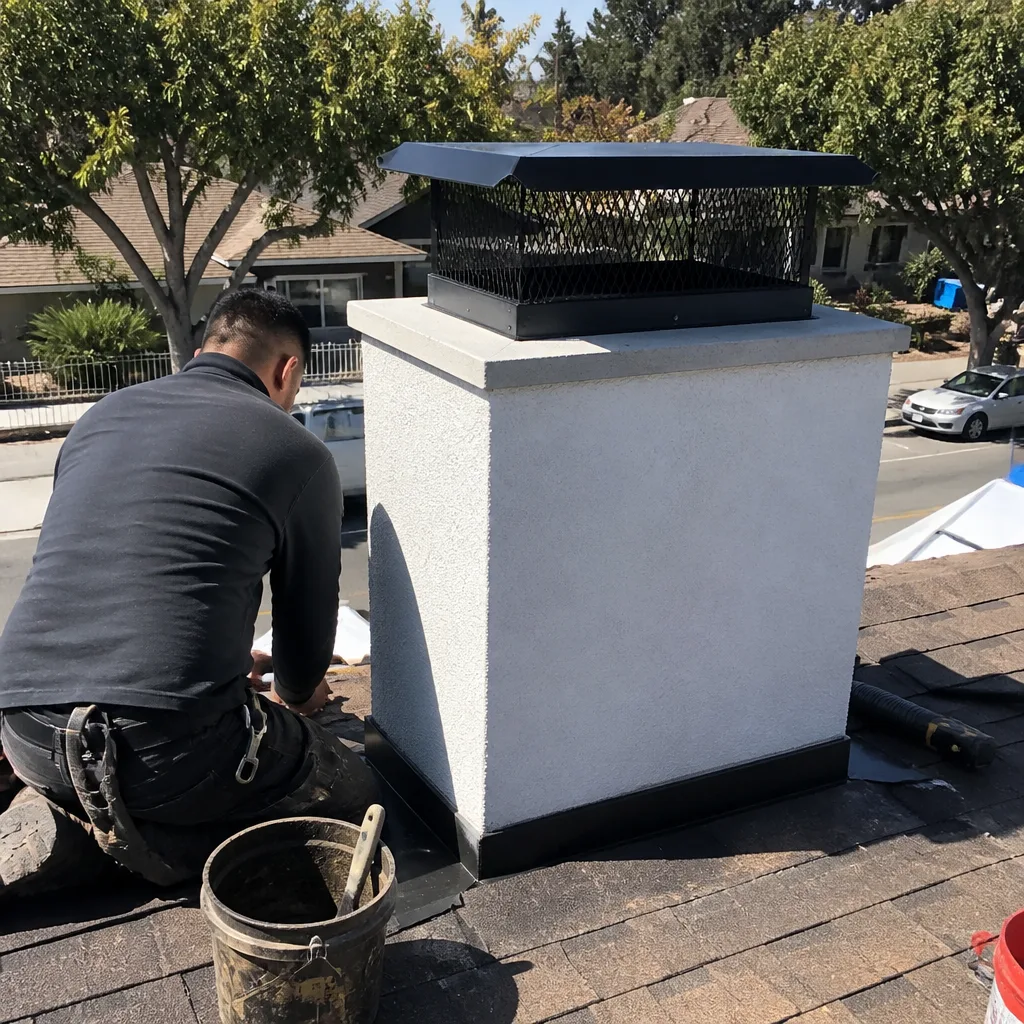
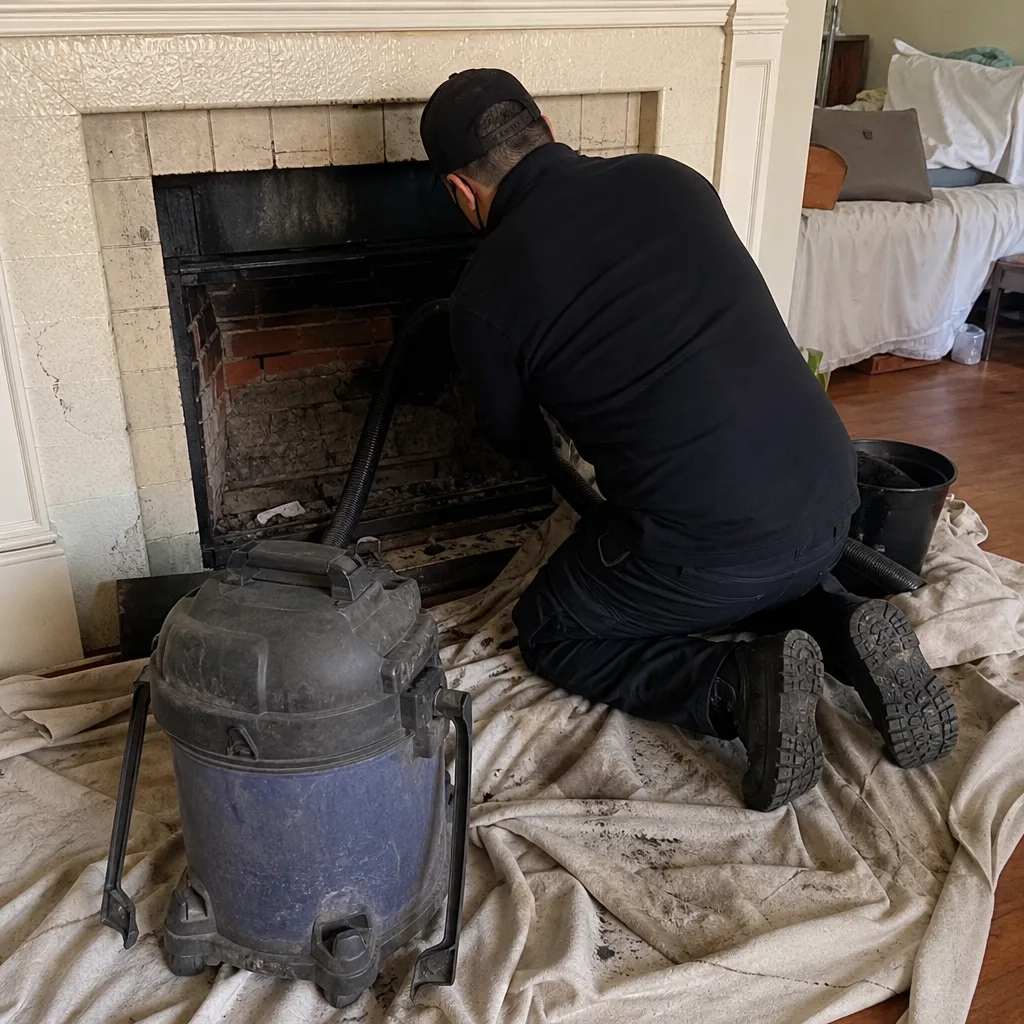
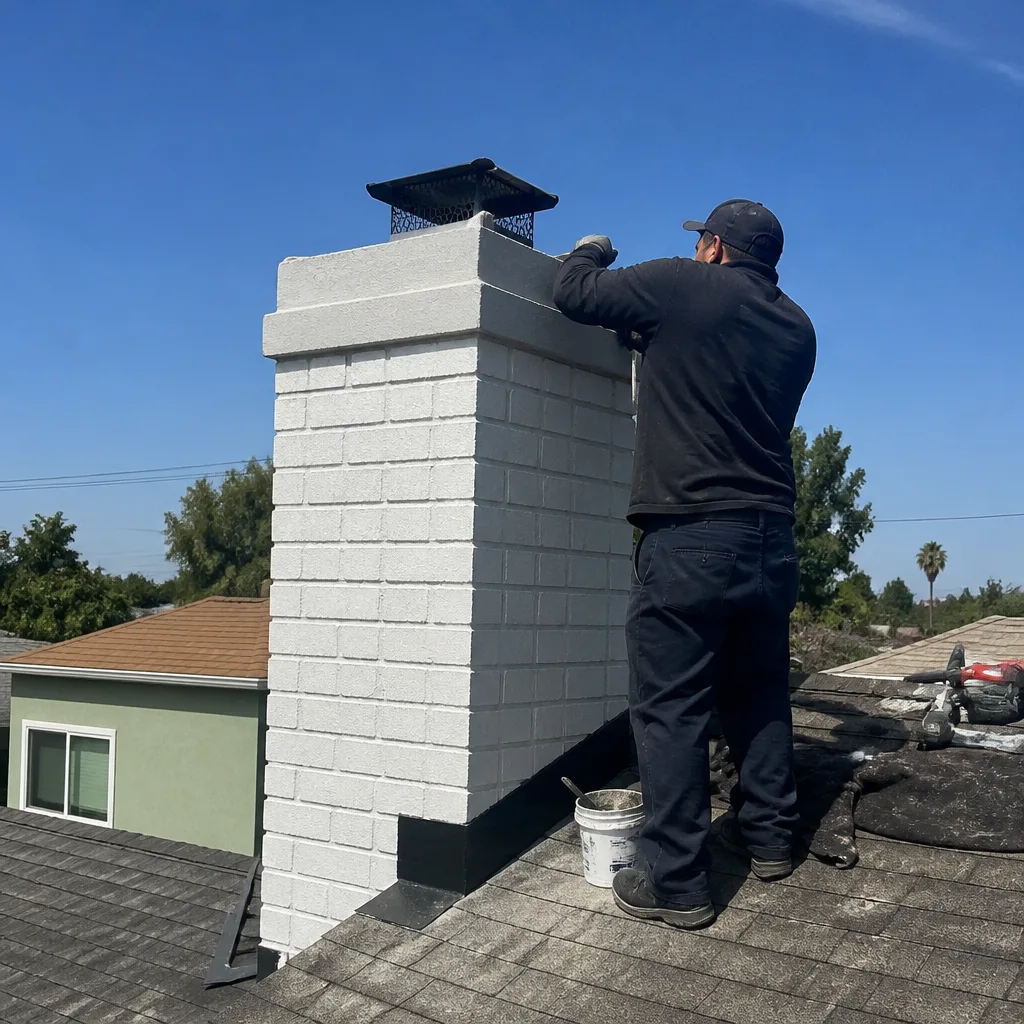
See the difference
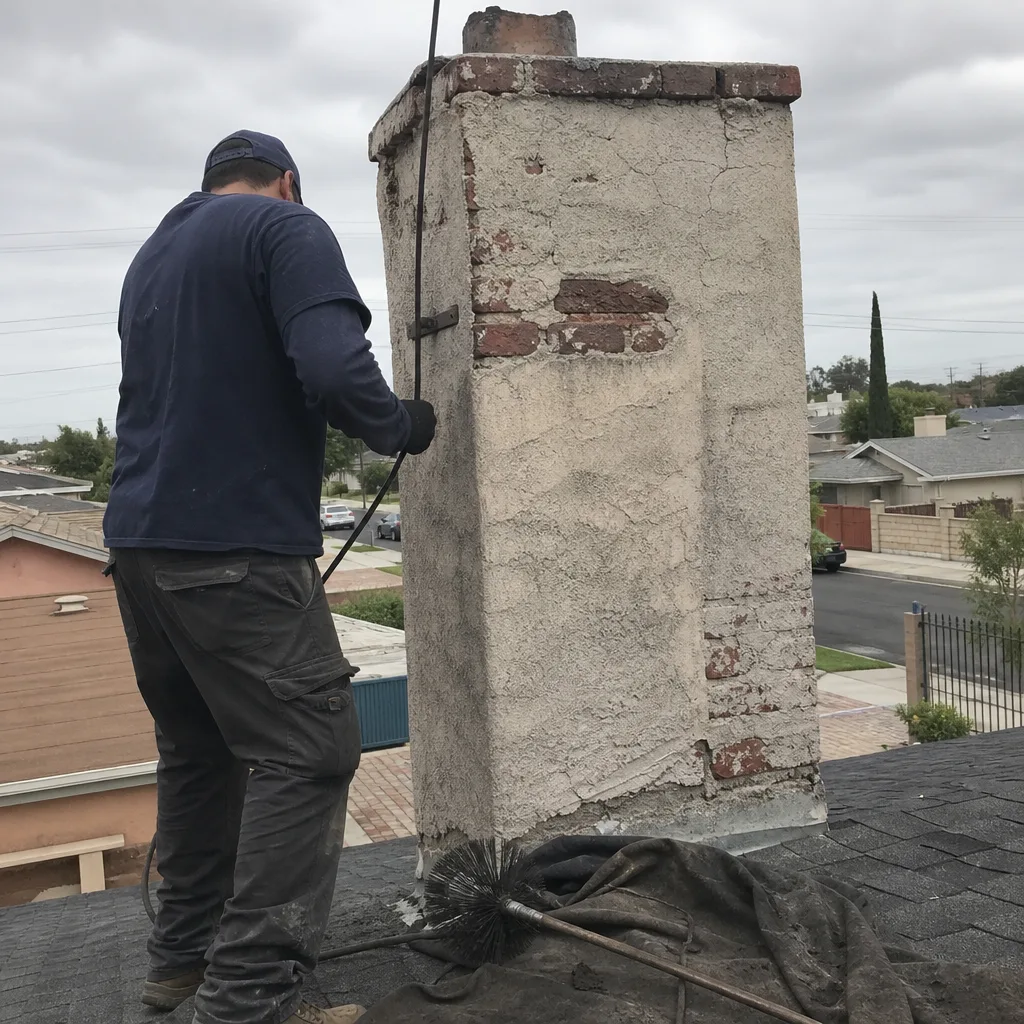 Before
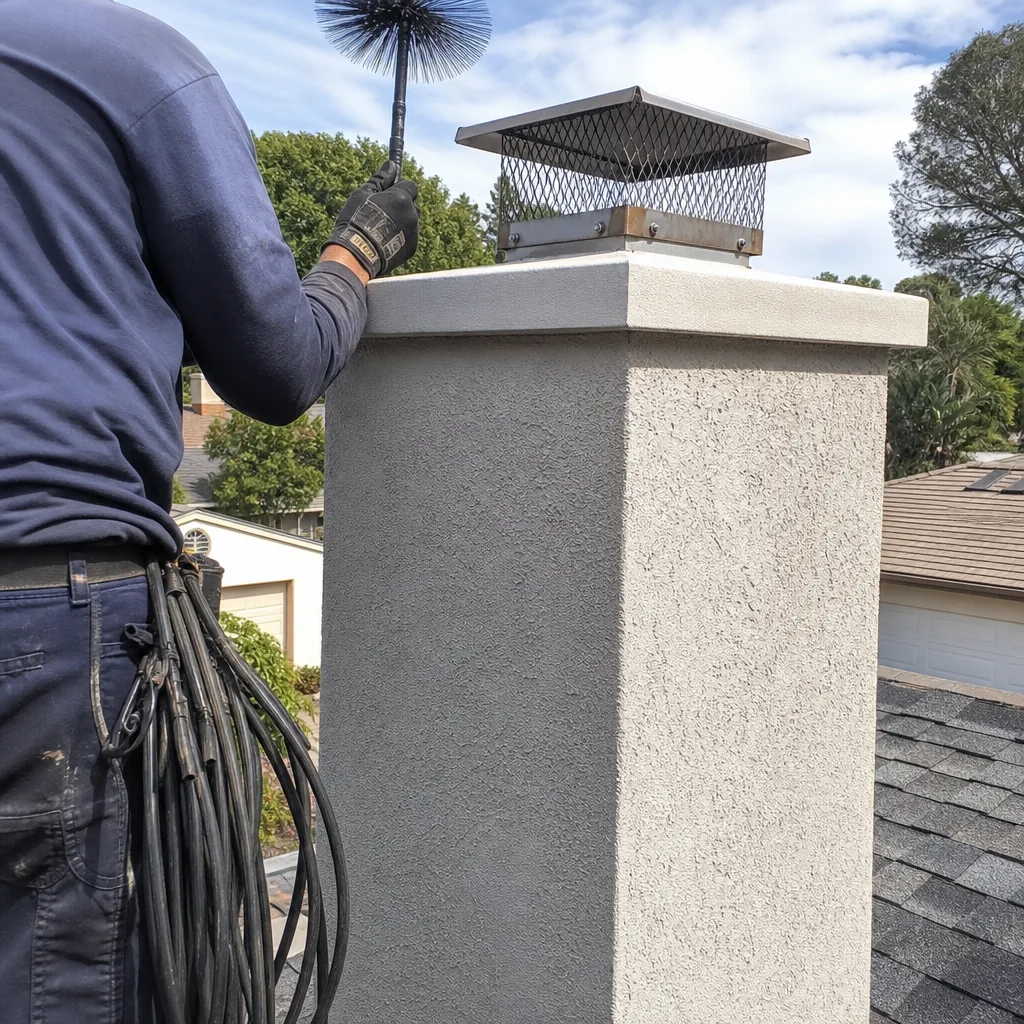 After
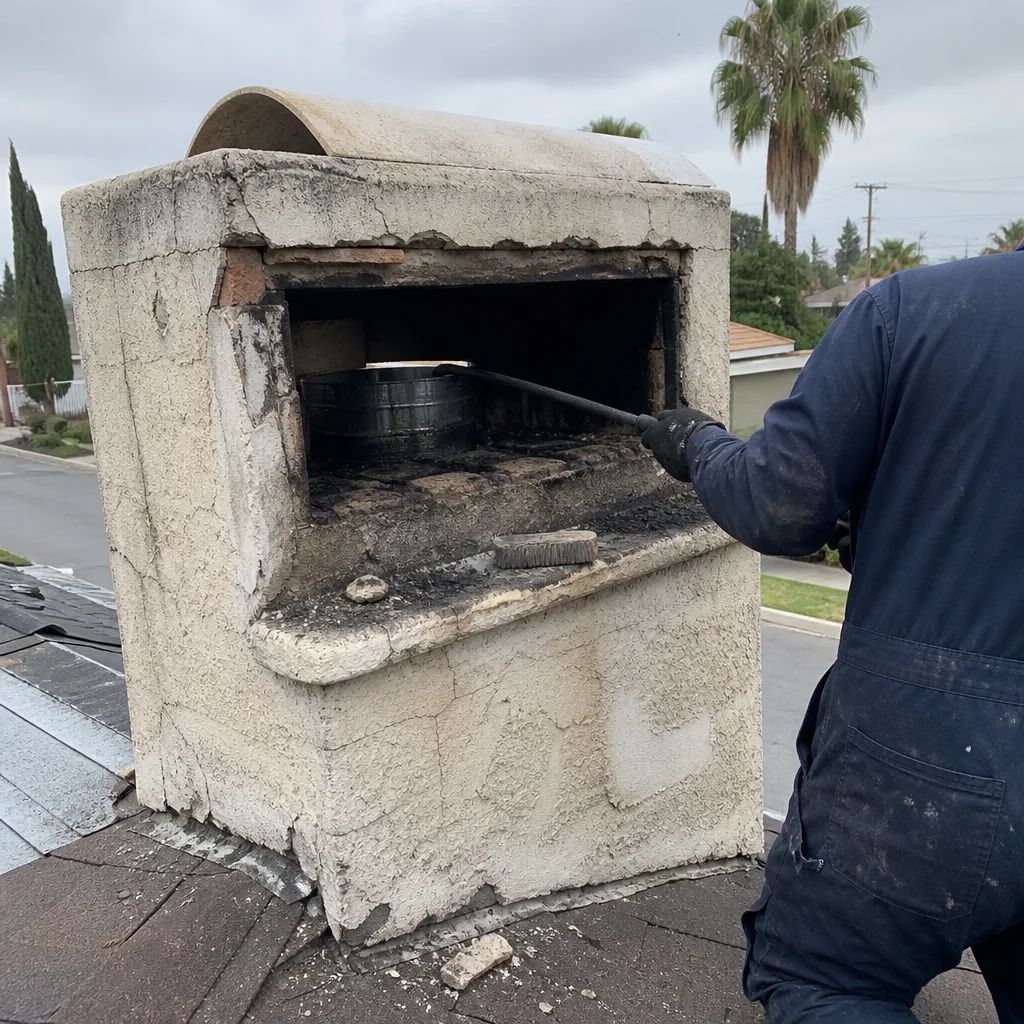 Before
 After
 Before
 After
Common Mistakes to Avoid
- Using the wrong brush size. A brush that’s too small leaves creosote stripes on the flue walls, and you won’t know they’re there. A brush that’s too large can lodge in a clay liner and crack it, turning a cleaning job into a liner replacement.
- Cleaning from the roof without fall protection. South Gate roofs range from low-pitch to steep, and none of them are worth a spinal injury. If you’re not comfortable on a ladder with a roof pitch in front of you, that is information, not weakness. Let a pro do the roof work.
- Assuming the firebox is the chimney. Many homeowners clean the firebox and think the flue above is just as clean. The flue is where the creosote builds up. A clean firebox means almost nothing about flue condition.
- Skipping the inspection step. Cleaning without inspecting is half the job. The inspection is what catches liner cracks, blockages, and water intrusion. If you’re not running a camera through the flue, you’re guessing.
- Using chemical creosote logs as a substitute for sweeping. These products break down some creosote into a more removable form. They do not clean the chimney, and in some cases they can accelerate the flaking of creosote that then blocks the flue. A sweep is still required.
- Ignoring the dryer vent in the same season. In South Gate homes where the dryer vent shares an attic or wall cavity with the chimney, a lint blockage is a parallel fire risk. If you’re already thinking about exhaust safety, treat both systems together.
- Waiting until you can see the problem. Chimney fires and carbon monoxide leaks don’t give visible warning. The maintenance point is to address the risk before the symptom appears.
Frequently Asked Questions
A professional chimney sweep in South Gate typically runs $150 to $300 depending on the system type, level of creosote buildup, and whether any repairs are identified during the visit. The price includes the cleaning, a visual inspection, and documentation of the service for your records. Call (833) 958-8849 for an exact quote on your system, estimates are free.
Yes, California does not require a license to clean your own chimney on your own property. The legal permission, however, does not change the practical risk: consumer brush kits cannot remove Class 2 or Class 3 creosote, and homeowners cannot perform a meaningful inspection without camera equipment. Legal and advisable are different questions.
The National Fire Protection Association standard is to have the chimney swept when creosote reaches 1/8 inch of buildup, which for most homeowners translates to once per year if the fireplace is used regularly. In South Gate, where the burning season is shorter but moisture exposure is year-round, an annual sweep combined with a visual inspection is the standard recommendation.
Creosote accumulates, hardens, and eventually reaches the point where it can ignite inside the flue. Beyond the fire risk, moisture combined with creosote creates acidic conditions that corrode clay tile liners and metal components. The cost of repair after years of neglect is typically 10 to 20 times the cost of annual maintenance.
You need a new liner only if the existing liner is cracked, separated, or corroded to the point where it can no longer contain heat and combustion gases. The way to know is with a camera inspection. A reputable chimney professional will show you the footage and explain exactly what you’re seeing. If you’re being told you need a new liner without a camera inspection that you’ve seen with your own eyes, get a second opinion. HeatShield ceramic resurfacing can also restore a damaged liner in some cases, which is a less invasive and less expensive option than a full liner replacement.
Yes. Clogged dryer vents are a leading cause of residential fires in the U.S., and the mechanism is the same as a chimney fire: combustible material accumulating in an exhaust pathway that gets hot. South Gate homes with long or convoluted dryer vent runs are at higher risk. At Chimney Sweep South Gate, dryer vent cleaning is a standalone safety service, not an afterthought, because the fire risk is just as real as it is in a chimney. See the full service at Dryer Vent Cleaning in South Gate.
The Bottom Line
The DIY-versus-professional chimney question is not really about saving money. It’s about whether you can correctly identify the risk class of your creosote, safely access a roof or flue, remove the deposit completely, and verify the liner is intact afterward. That’s four separate skills, and consumer equipment supports roughly one of them. The homeowners who fare best in South Gate treat DIY as the between-visit maintenance layer and professional service as the annual baseline. It’s the same approach you’d take with any system in your home that can burn the house down if the invisible part gets ignored.
Ready to get your chimney or dryer vent checked? Chimney Sweep South Gate home is one call away. Reach us at (833) 958-8849 for a free estimate on sweeping, inspection, or repair anywhere in South Gate. If your system needs work, we’ll show you the camera footage before we recommend anything. No guesswork, no upsell, just the condition of your flue in plain sight.
Written by the team at Chimney Sweep South Gate, serving South Gate since 2013. Explore more guides & resources on chimney care and home safety.