
Last updated November 3, 2026
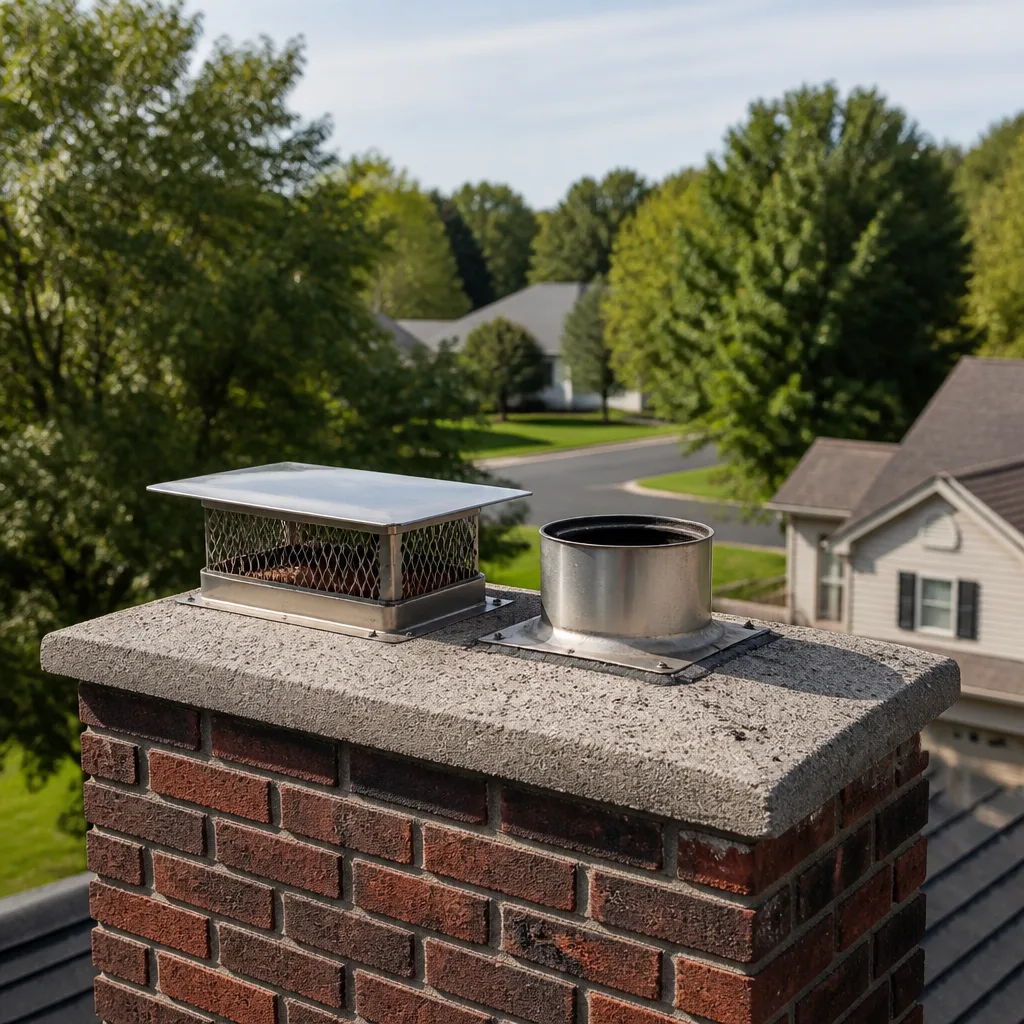 Sweep & inspection
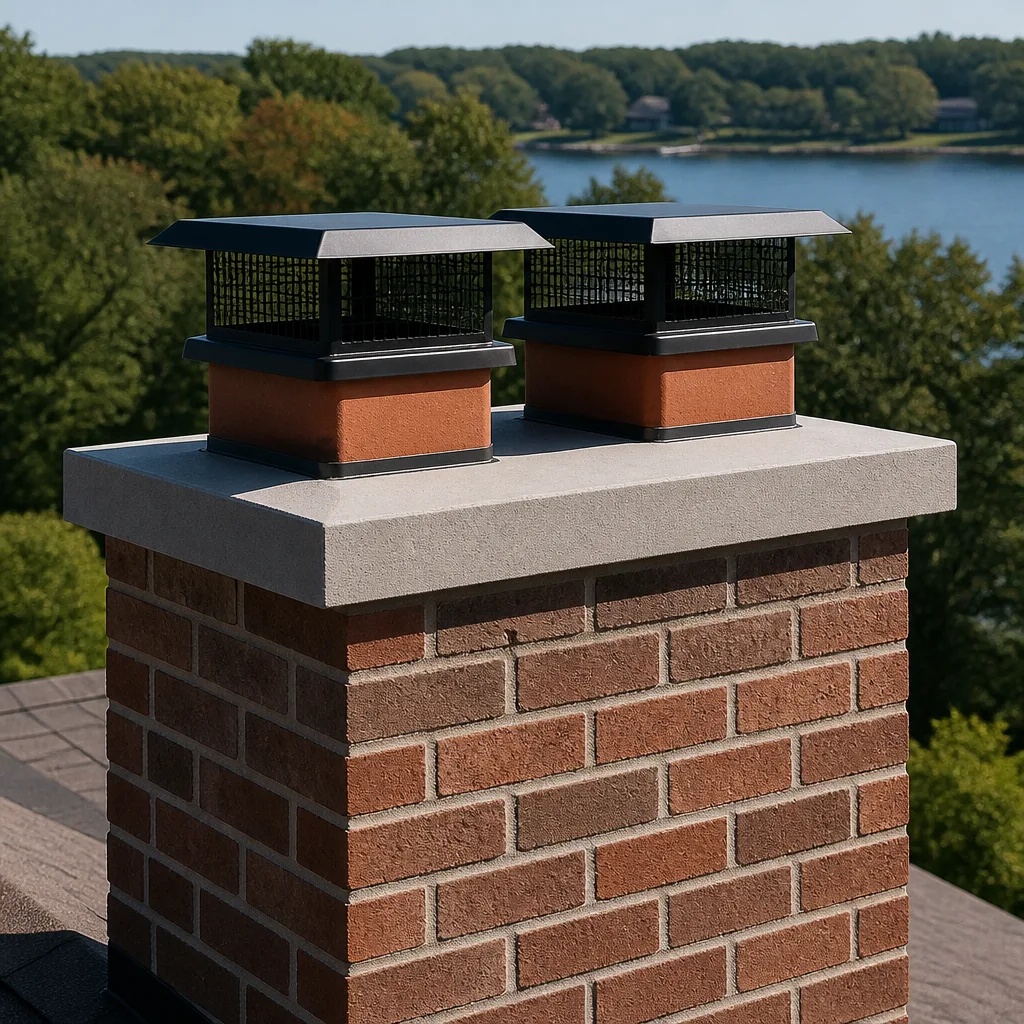 Caps & crowns
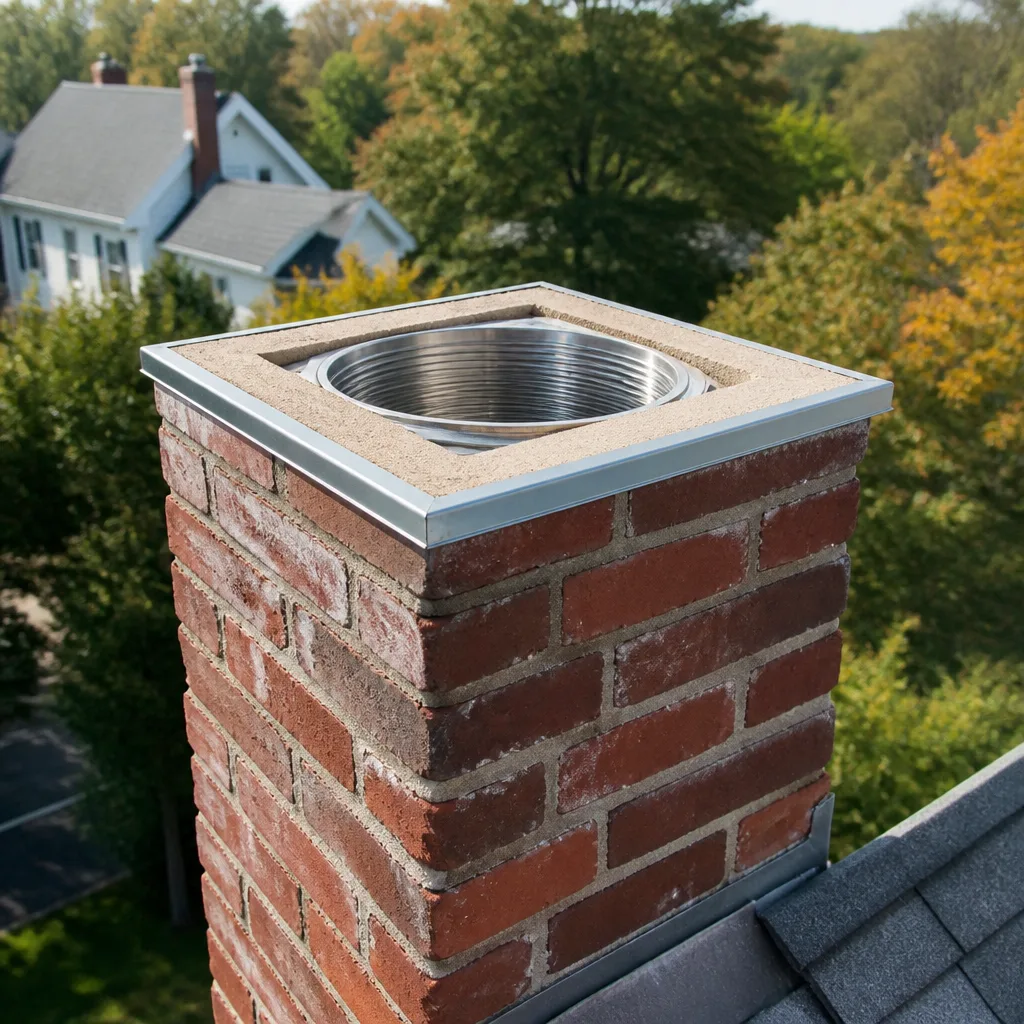 Flue relining
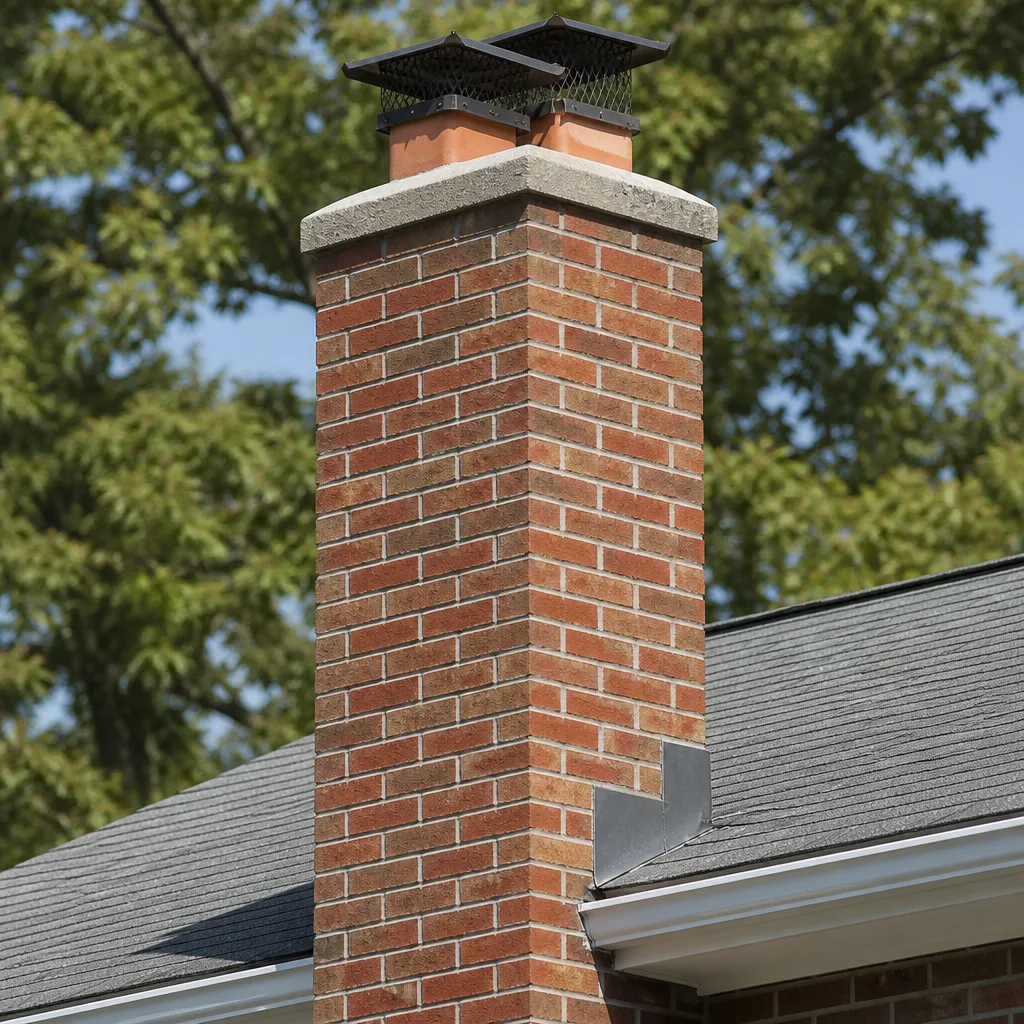 Masonry repair
 Gas fireplace service
Level 1 sweep and inspection to the NFPA 211 annual standard - flue, crown, cap, and flashing checked and photographed
Chimney sweep logs do not sweep chimneys. They loosen some creosote - which then falls where a brush and vacuum still have to collect it.
The Complete Chimney Sweep Guide for South Gate Homeowners
A chimney used only 10 times a year can still accumulate enough moisture-driven deterioration to need a full liner repair. That’s the reality in South Gate, where mild winters mean fireplaces sit idle for months at a time. Seasonal use doesn’t protect your chimney. It changes what goes wrong with it. This guide walks through what actually happens inside a South Gate chimney, why our specific climate creates a different set of problems than what generic chimney guides describe, and how to know whether your fireplace needs attention now or can wait another season. For more guides & resources, see our blog.
Quick Answer
A professional chimney sweep in South Gate, CA typically costs between $149 and $279 for a standard cleaning and Level 1 inspection, with pricing adjusted for chimney height, accessibility, and creosote severity. Most South Gate homes should schedule a sweep and inspection every 1 to 3 years depending on usage, not because of heavy creosote buildup, but because Southern California’s dry-then-wet cycles, animal activity, and seismic movement affect chimneys differently than cold-climate homes.
Styles & brands we work with
- Sweep & inspection
- Caps & crowns
- Flue relining
- Masonry repair
- Gas fireplace service
Table of Contents
- Why South Gate Chimneys Fail Differently
- The Three Levels of Chimney Inspection: Which One Applies to You
- What Actually Happens During a Professional Sweep: Step by Step
- How Often Should South Gate Homes Schedule a Sweep?
- How to Read Your Chimney Sweep Report
- The Seismic Factor: Earthquakes and Your Chimney
- Creosote in a Mild Climate: The Buildup You’re Not Expecting
- Dryer Vents Are Part of the Same Exhaust Equation
Why South Gate Chimneys Fail Differently
Most chimney advice online is written for homeowners in Ohio, Pennsylvania, or Minnesota, where freezing temperatures and daily winter fires drive the conversation. South Gate sits in a Mediterranean climate: long dry stretches, occasional intense rain events, and daytime temperature swings that may not feel dramatic but are enough to stress masonry over time. Here’s what actually matters for chimneys in this part of LA County.
First, the dry-then-wet cycle. South Gate can go eight months without meaningful rain, then get two weeks of atmospheric-river downpours. Masonry absorbs water during those wet periods. When the weather turns dry again, the water evaporates and leaves behind mineral deposits that expand inside the mortar joints. Repeat that cycle enough times and the mortar starts to crack, spall, and crumble. Cold-climate chimneys fail through freeze-thaw expansion. South Gate chimneys fail through wet-dry mineral stress and sun exposure. Same result, different mechanism.
Second, low usage creates a different type of risk. A chimney that gets used a dozen times between November and February doesn’t accumulate creosote the way a Vermont chimney does. But idle chimneys become attractive nesting sites. Birds, squirrels, and raccoons don’t mind a quiet flue. We’ve pulled nests out of fireplaces that hadn’t been lit in three seasons. Those blockages create serious carbon monoxide risk the first time a homeowner fires up the hearth again.
Third, the sun. South Gate gets roughly 280 days of sunshine per year. UV exposure dries out chimney caps, flashings, and the exterior masonry sealant. A chimney crown that cracked in April will let water in during the first big rain in November, and the homeowner won’t see the interior damage until a Level 2 inspection catches it.
For South Gate homeowners, this means scheduled inspection matters more than scheduled sweeping. The sweep removes what’s there. The inspection finds what’s failing.
The Three Levels of Chimney Inspection: Which One Applies to You
Every professional chimney service follows the National Fire Protection Association’s three-tier inspection framework. Understanding these levels helps you ask the right questions and avoid paying for an inspection either too shallow or too invasive for your situation.
Level 1: The Annual Standard
A Level 1 inspection is the baseline check performed during every routine sweep. The technician examines all readily accessible areas of the chimney, the fireplace, the damper, and the exterior condition of the flue. No special tools are used. No access to the roof interior. This is the right inspection when nothing about the system has changed: same fireplace, same fuel, same usage pattern.
For most South Gate homes that burn occasional wood fires or use a gas fireplace seasonally, a Level 1 inspection during a sweep catches the majority of issues: cracked crowns, failing mortar, damper misalignment, and visible creosote or nesting debris.
Level 2: Required When Something Changes
A Level 2 inspection builds on Level 1 but adds video camera scanning of the full flue interior. The technician runs a camera up the entire length of the chimney to inspect for hidden cracks, gaps between flue tiles, voided mortar joints, and liner damage that isn’t visible from either end.
NFPA guidelines say a Level 2 inspection is required whenever any of these things happen:
- You buy a new home with a chimney or fireplace
- You change the fuel type (converting from wood to gas, for example)
- Major weather or seismic events occur
- A chimney fire occurs
- A building fire or structural modification affects the chimney
That third bullet matters for South Gate specifically. The LA basin sits on multiple fault lines. After any earthquake strong enough to rattle windows – generally magnitude 4.5 or above near South Gate – the chimney is one of the most vulnerable structural elements of your home. Masonry doesn’t flex. It cracks. A Level 2 inspection after seismic activity is the only way to know whether your flue tiles shifted, your crown cracked, or your liner separated.
Level 3: When Structural Damage Is Suspected
A Level 3 inspection is the most invasive and the least common. It involves removing parts of the chimney structure – sections of masonry, the crown, or interior wall material – to access concealed flue areas. This is ordered only when a Level 1 or Level 2 inspection suggests serious hidden damage that can’t be confirmed without destructive access.
If you’re not sure which level applies, here’s the practical rule: annual sweep means Level 1. Home purchase, fuel change, earthquake, or chimney fire means Level 2. A Level 3 is something you’ll know you need only after the first two levels come back with red flags.
What Actually Happens During a Professional Sweep: Step by Step
Understanding the process helps you evaluate whether a contractor is performing a thorough job or doing what one of our clients called “the brush-and-bill special.” A proper sweep follows a defined sequence.
Step 1: Work Area Preparation and System Check
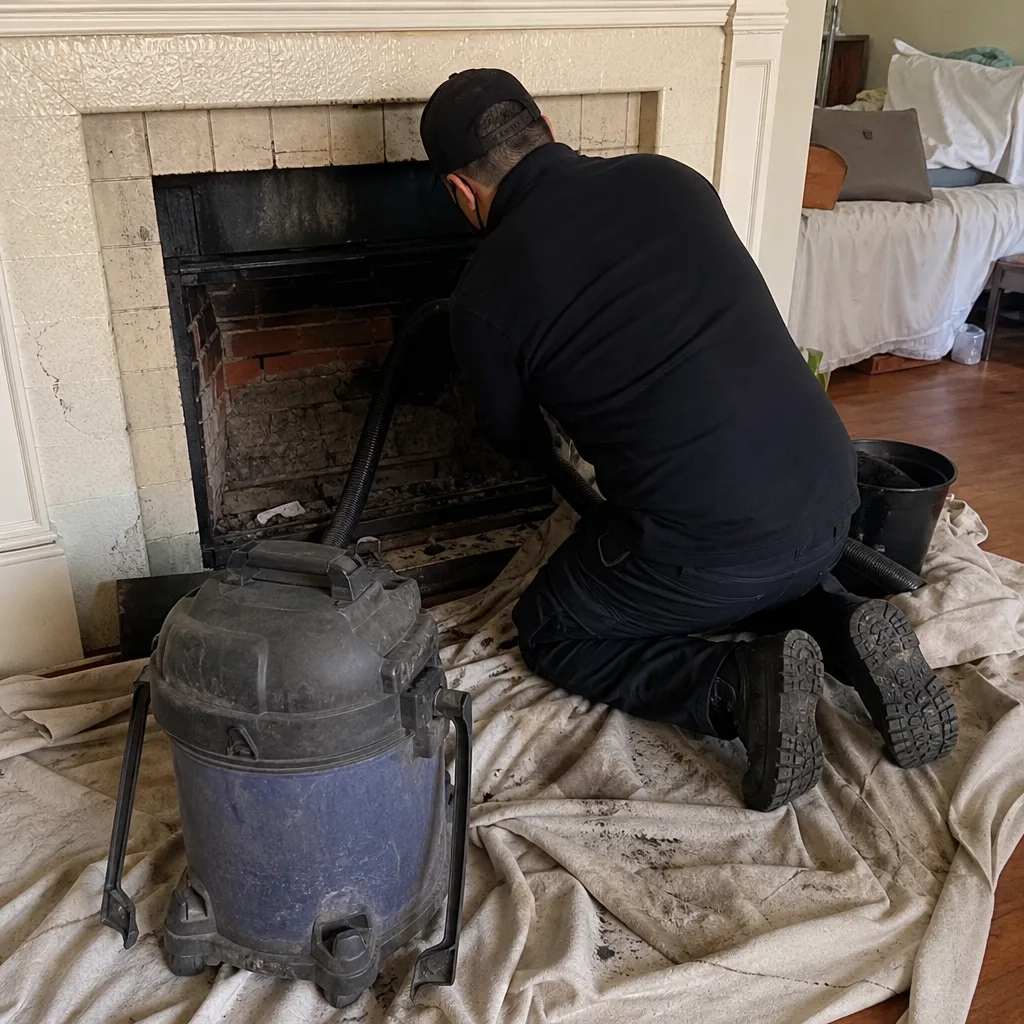
Before any brush touches the flue, the technician should protect your floors and furnishings. Canvas drop cloths go down around the hearth. The firebox gets sealed with industrial-grade coverings to prevent dust migration. Then the tech checks the damper operation, the condition of the firebox, and whether the chimney cap is present and seated correctly. If the damper doesn’t open fully, the job stops right there. Sweeping a chimney with a frozen or obstructed damper wastes your money.
Step 2: Initial Flue Assessment
Every flue is different. The technician will identify the flue dimensions, the type of liner (clay tile, metal, or cast-in-place), and the level of creosote or debris present. This determines tool selection. A straight clay-tile flue in a mid-century South Gate home takes a standard wire brush. A corrugated metal liner requires a specially sized poly brush. Using the wrong brush on the wrong surface causes damage, and a competent sweep knows the difference before starting.
Step 3: Mechanical Brushing
The technician runs the appropriate brush from either the top down or the bottom up, depending on the setup and access. Top-down sweeps are more common in South Gate, where most residential roofs are low-slope and accessible. Each pass dislodges creosote, soot, and debris from the flue walls. Multiple passes may be needed for stubborn glaze or thick accumulation.
Step 4: Vacuuming and Debris Removal
A shop-style vacuum isn’t acceptable for this work. Professional chimney sweeps use high-suction HEPA-filtered vacuums designed to capture fine particulate. The firebox, smoke shelf, and damper area get vacuumed thoroughly. So does the area around the cleanout door at the base of the chimney, if your home has one.
Step 5: Cap and Damper Inspection
Once the flue is clean, the technician inspects both the chimney cap and the damper for function and wear. The cap is your first line of defense against rain, nesting animals, and hot ember escape. Damper seals degrade over time. A damper that seats poorly lets conditioned air escape up the flue during summer months, costing you money year-round in a climate where air conditioning runs for six months of the year.
Step 6: Post-Sweep Visual Inspection and Report
The technician walks you through what was found, shows you any debris that came out, and provides a written report. You should be able to see the condition of your flue for yourself either directly through the firebox opening or from photos. If the tech can’t produce either, the methodology is lax.
How Often Should South Gate Homes Schedule a Sweep?
The answer most guides will give you is “once a year.” That’s a useful default, but not an accurate one for every South Gate household. The real answer depends on your usage pattern and your fireplace type.
For wood-burning fireplaces used regularly – meaning more than 40 fires per season – an annual sweep is warranted. Creosote from wood combustion builds fastest in the first few months of seasoning. Even occasional fires produce creosote vapor that condenses on flue walls.
For wood-burning fireplaces used lightly – the South Gate norm of 10 to 20 fires per year – an annual sweep isn’t always necessary. See The Complete Guide to Chimney Cleaning in South Gate for a full breakdown of local service expectations. Every 2 to 3 years is adequate, provided you’re consistent about it. But here’s the nuance: skip the sweep and you’re also skipping the inspection. And in our climate, the inspection is the higher-value service. A chimney that gets lit 15 times a season may stay clean but still develop crown cracks, flashing failures, and animal blockages that only an inspection catches.
For gas fireplaces, the calculus changes. Gas burns clean, producing negligible creosote. But gas log sets can develop burner problems, airflow issues, and corrosion. An inspection every 2 years is prudent. If you have a gas insert, the unit’s venting should be checked annually because vent failure on an insert is a carbon monoxide concern, not just a performance issue.
For homes that never use the fireplace at all, the recommendation is the opposite of what you might expect: get the chimney inspected every 2 to 3 years anyway. Idle chimneys are the ones most likely to develop hidden structural problems and the ones where animal nesting produces the most dangerous consequences when the fireplace does get lit again.
How to Read Your Chimney Sweep Report
The report you get after a sweep can look like a wall of jargon. Here’s a practical decoding guide for South Gate homeowners who want to know what’s urgent and what can wait.
Creosote level ratings. Chimney professionals classify creosote into three grades. Stage 1 creosote is flaky and brushable – normal, manageable. Stage 2 is harder, more tar-like, requiring moderate effort to remove. Stage 3 is glazed, hard, and burns at a higher intensity – a chimney fire potential. Stage 1 is routine. Stage 2 in a lightly used South Gate chimney suggests the fires you’re burning aren’t getting hot enough, possibly because of damp wood or poor draft. Stage 3 requires professional-grade removal and should not be ignored.
Flue liner condition. Your report may note “gaps between flue tiles,” “spalling” (flue tile flaking), or “liner separation.” Gaps between tiles are the most common finding in older South Gate homes. Clay tile liners with mortar joints that have deteriorated allow heat and gases to escape into surrounding masonry. This is a repair item, not a future consideration. Spalling is tile deterioration and often indicates moisture intrusion from above. Liner separation on a metal chimney is a structural failure and the fireplace should not be used until corrected.
Moisture indicators. Look for terms like “efflorescence” (white mineral deposits on masonry), “crown cracking,” “flashing failure,” and “water staining.” Each one signals a pathway for water into your chimney system. In South Gate’s wet-dry climate, these don’t self-correct. They worsen with every cycle. A cracked crown that costs a few hundred dollars to seal or resurface can prevent thousands in masonry repair two seasons later.
Cap and spark arrestor status. A missing or damaged chimney cap is a priority fix in South Gate, not just because of rain but because of our bird and squirrel population. A cap without a functioning spark arrestor is a fire hazard in dry conditions – strong Santa Ana winds can carry embers onto your own roof or a neighbor’s.
The report should end with clear classifications. “Immediate action required” means don’t use the fireplace until repaired. “Recommended” means budget for it this or next season. “Monitor” means keep an eye on it and reassess at the next inspection. If the report doesn’t make these distinctions clear, ask the technician to clarify before they leave.
The Seismic Factor: Earthquakes and Your Chimney
South Gate sits within 10 miles of the Newport-Inglewood Fault, the Whittier Fault, and the broader complex that includes the Puente Hills Thrust. Chimneys are among the most commonly damaged structures in Southern California earthquakes. This isn’t a rare-event concern. It’s a recurring local reality.
Masonry chimneys respond to lateral seismic force by cracking, typically at the roofline where the structure transitions from supported to unsupported. What a homeowner sees from the ground may be nothing. What happens inside the flue: tiles shift, mortar joints crack, and the liner can separate. The chimney then becomes both a fire hazard and a structural hazard. Flue gases can escape into wall cavities or the attic. Loose masonry above the roofline can break free during the next event.
If your chimney is masonry and your home predates the 1980s, your structure likely lacks modern seismic retrofitting. Even if your home performed fine through the 2019 Ridgecrest sequence or the smaller 2024 Malibu quakes, accumulating micro-damage doesn’t announce itself. A Level 2 inspection with a camera is the only way to see what’s actually going on inside a flue after seismic activity.
Here’s a straightforward rule for South Gate homes: after any earthquake that makes you stop and look around, schedule a Level 2 chimney inspection. It’s more than most homeowners do, and it’s the difference between catching a hairline tile crack and discovering flue liner failure during a chimney fire.
Creosote in a Mild Climate: The Buildup You’re Not Expecting
The common belief among South Gate homeowners is that creosote buildup is a cold-climate problem. That’s only partly true. Read DIY vs Professional Chimney Cleaning: The South Gate Homeowner’s Decision Guide to understand when to call in help. You won’t get the same accumulation as a Minnesota home that burns fires daily for five months. But you will still get creosote, and the form it takes here creates its own risks.
Creosote forms when wood smoke cools and condenses on flue walls. The determining factor isn’t outdoor temperature. It’s flue gas temperature, which is driven by how hot your fire burns and how well your chimney drafts. South Gate’s mild weather can actually produce lower-temperature fires. Homeowners light a fire for ambiance on a 55-degree evening, not because they need heat. Those lower-intensity fires produce more incomplete combustion, which means more creosote per burn than a roaring midwinter fire.
Additionally, our altitude and coastal influence reduce natural draft. A chimney that draws weakly in November produces more smoke condensation per fire. The result is creosote buildup that looks lighter than a cold-climate chimney but sits stickier and harder on flue walls. Stage 2 creosote is a frequent finding in South Gate chimneys used only during the holidays.
The fix has two parts. Burn hotter, shorter fires rather than smoldering ones. Use well-seasoned wood – in our dry climate, properly stacked and covered wood reaches adequate moisture content within a year, faster than most of the country. And schedule your sweeps based on actual inspection findings rather than an arbitrary calendar date.
Dryer Vents Are Part of the Same Exhaust Equation
This guide is about chimney sweeping, but a complete picture of South Gate exhaust safety includes the dryer vent. Both systems move heated air and combustion byproducts – or in the case of dryers, hot moist air full of flammable lint – from inside your home to outside. Both cause house fires when neglected.
Dryer vents in South Gate homes face their own set of issues. Long vent runs are common in the sprawling single-story ranches built throughout the city’s 1950s-1980s boom. Longer runs mean more surface area for lint to accumulate and more places for the airflow to slow. When the hot, humid exhaust slows down, lint deposits on the duct walls. Over time, it layers. What starts as reduced drying performance ends as a fully blocked vent, which is a fire hazard you can’t see from outside.
The National Fire Protection Association reports that dryers and washing machines are involved in more than 15,000 structure fires annually in the US, and the leading cause is failure to clean the vent. In a city where utility rooms sit close to kitchens and shared walls, an exhaust fire spreads quickly.
You can schedule dryer vent cleaning in South Gate as a standalone service, which is how we treat it – as core safety work, not an add-on. The same technical rigor we bring to a chimney flue applies to a dryer exhaust run. Both need professional cleaning, both need inspection for routing problems, and both are fire prevention tasks most homeowners never see until something fails.
Common Mistakes to Avoid
- Skipping the inspection because the fireplace “hardly gets used.” In South Gate, low-use chimneys collect animal nests and suffer moisture damage while idle. Inspection is your early warning system.
- Burning unseasoned wood from a neighbor’s tree or a bulk delivery with no moisture check. Damp or green wood produces more creosote per fire than properly seasoned wood. In our dry climate, adequate seasoning is easy to achieve; there’s no excuse for burning wet fuel.
- Ignoring a missing or damaged chimney cap. A cap costs a fraction of what animal removal and flue relining cost. In South Gate’s bird and squirrel seasons, an uncapped flue is an invitation.
- Waiting until November to schedule service. Every chimney company in Los Angeles County gets slammed the week after the first cool night. Scheduling a sweep in the summer or early fall in South Gate means better availability and a lower-stress experience.
- Treating a gas fireplace as maintenance-free. Gas burns clean, but venting, burners, and damper assemblies still age. The “it’s just gas” mindset leads to neglected systems that fail carbon monoxide tests.
- Skipping the post-earthquake visual check. After any noticeable quake, walk outside and look at your chimney. Look for cracked masonry, displaced caps, or separation at the roofline. What you can see from the ground is a fraction of what could be wrong inside the flue.
- Using the fireplace with a known liner issue “just one more time.” A cracked flue tile doesn’t seal itself. Each fire sends heat and gases into a structural space they’re not supposed to reach. The cost of waiting often exceeds the cost of the original repair.
See the difference
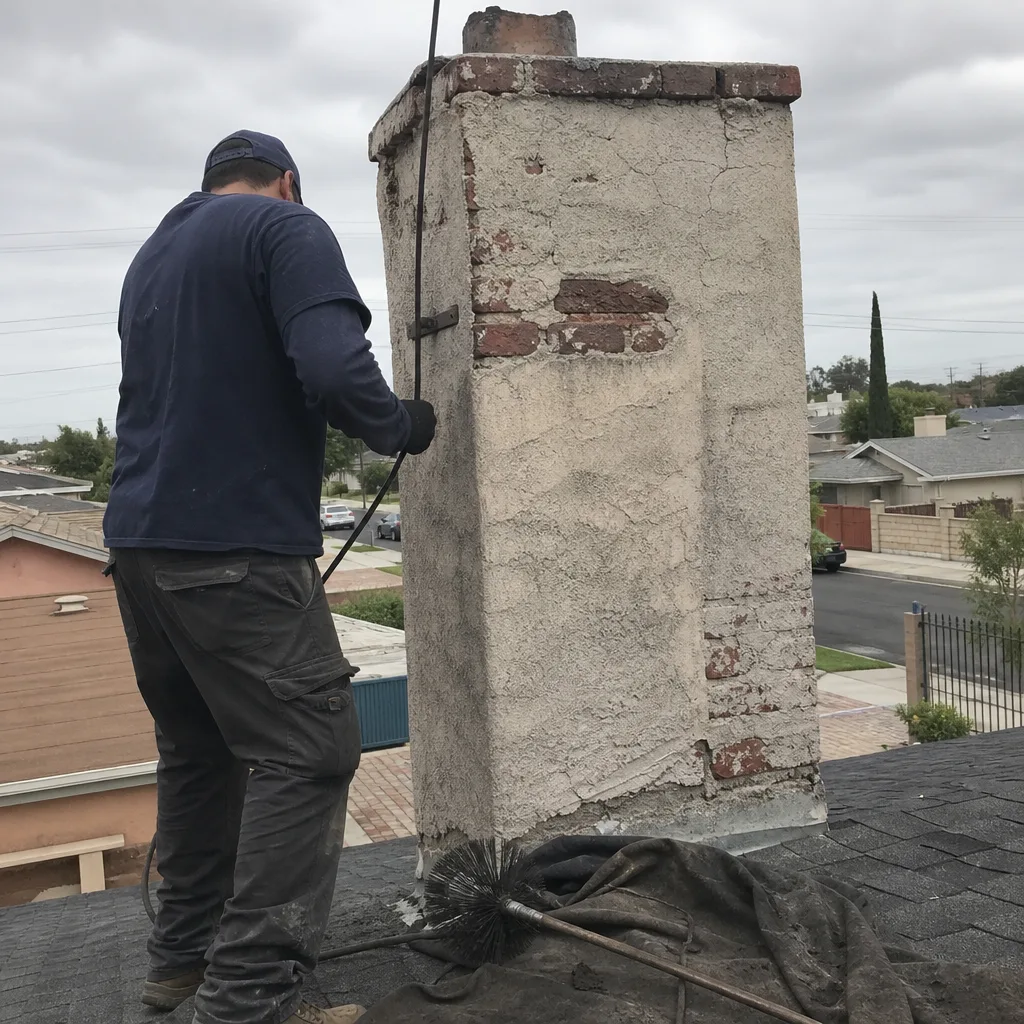 Before
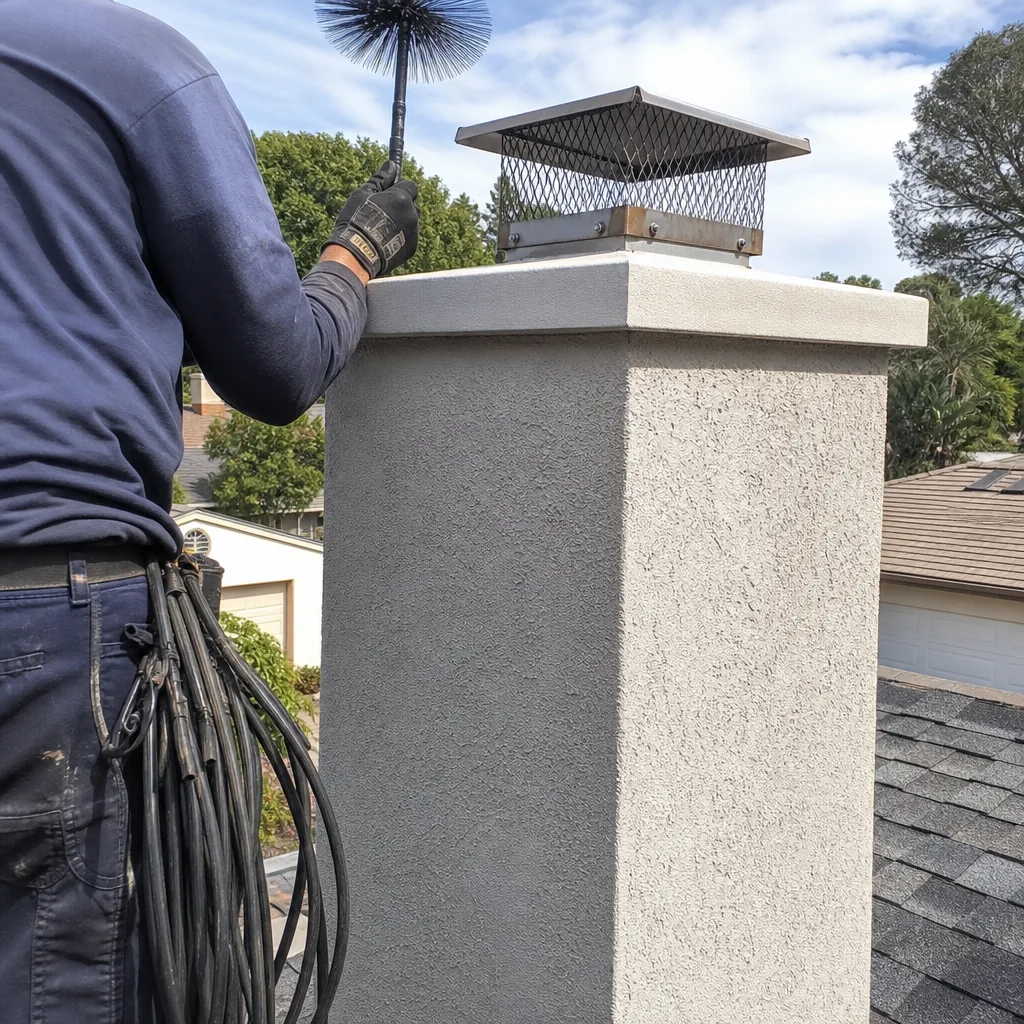 After
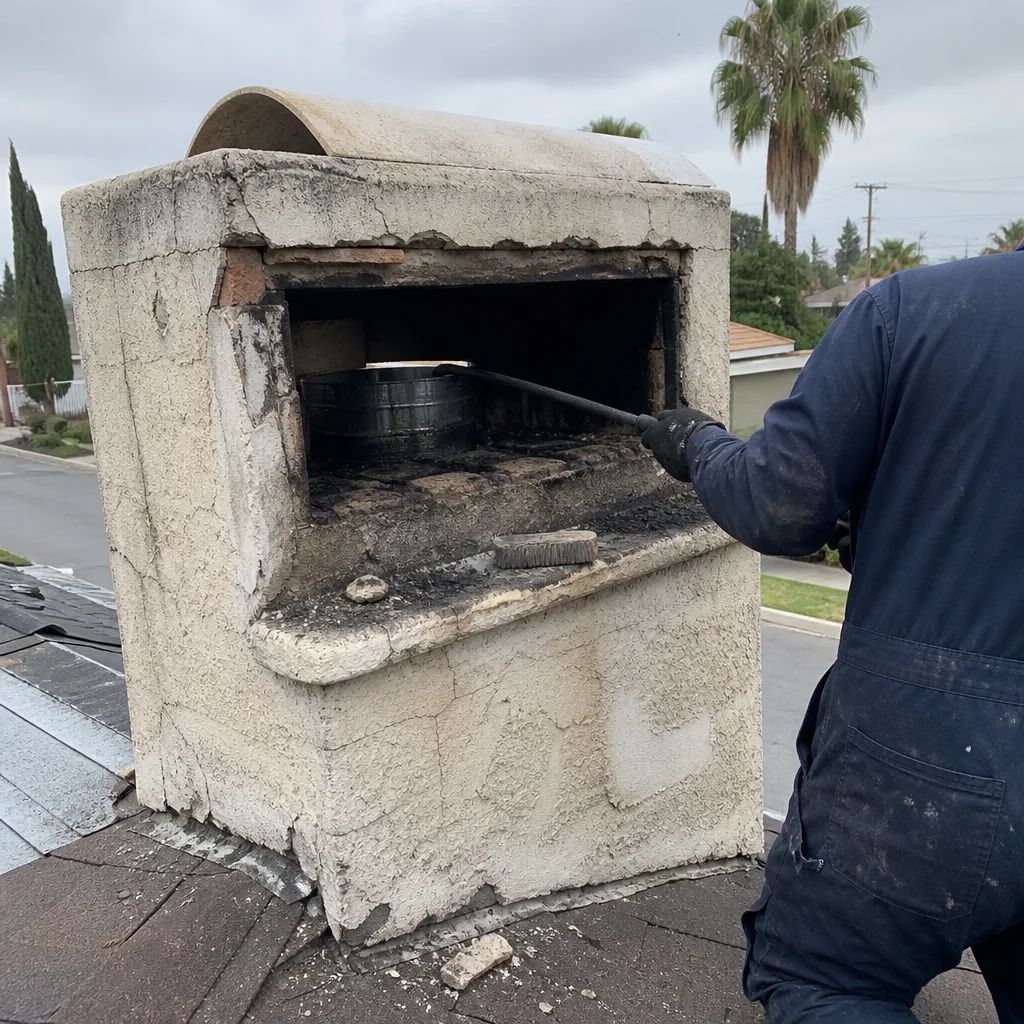 Before
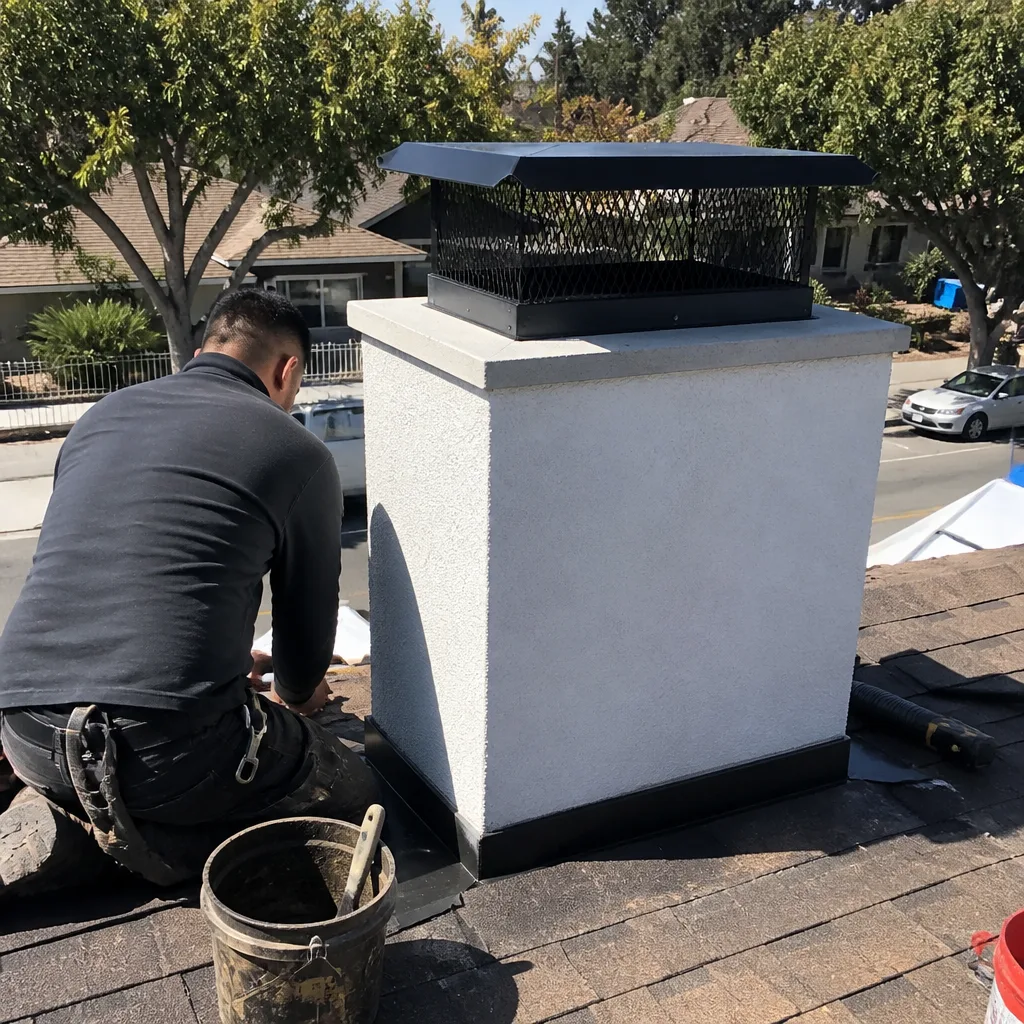 After
 Before
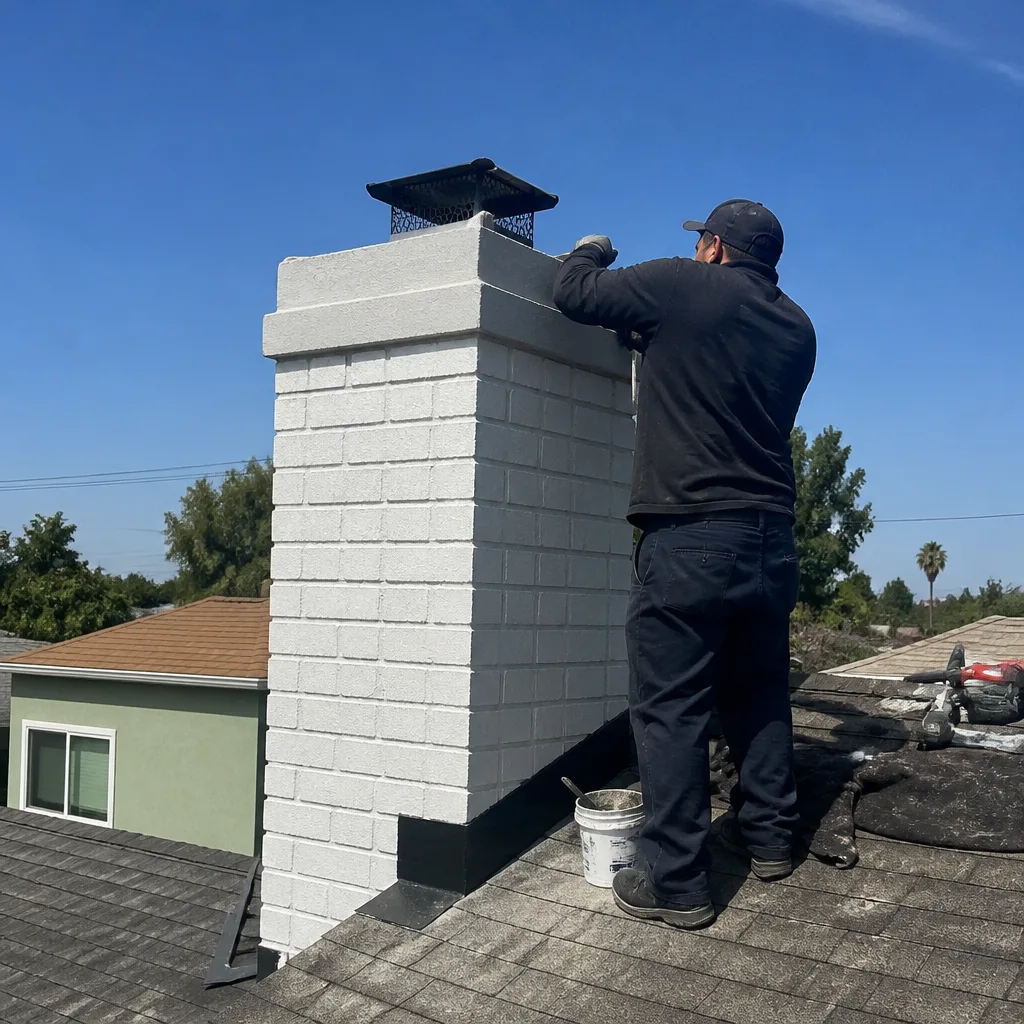 After
When to Call a Professional
Call a chimney professional when you notice any of these conditions: a burning smell when the fireplace is not in use, visible masonry cracks on the chimney exterior, water stains on interior walls or ceilings near the chimney, debris falling into the firebox, smoke entering the room during use, or a damper that won’t open or close fully. Any of these indicates a system problem, not a cosmetic issue. Also call if you’ve bought a home with a fireplace and have no inspection records, or if you’ve experienced a chimney fire – even a small one. Chimney Sweep in South Gate covers the full range from sweeping to structural assessment, and our Chimney Sweep South Gate home page has the current service details. For a specific issue, see Chimney Repair in South Gate to understand what structural problems look like when they appear on camera. Chimney Sweep South Gate offers free estimates in South Gate – call (833) 958-8849 to schedule.
Frequently Asked Questions
A standard chimney sweep and Level 1 inspection in South Gate typically runs between $149 and $279, depending on the chimney’s height, the accessibility of the roof, and the severity of any creosote or debris removal required. Gas fireplace inspections fall at the lower end of that range; taller two-story chimneys with heavy buildup fall at or slightly above it. Call (833) 958-8849 for an exact quote – estimates are free.
Not necessarily. Depending on the extent and location of the cracks, a ceramic resurfacing system like HeatShield may restore the liner’s integrity at a lower cost than full replacement. The right answer comes from a camera inspection that shows the actual condition of the flue. If the damage is localized and the structural masonry is sound, relining with a product like HeatShield or a DuraFlex system from our chimney repair service may be the right material for the job. If the damage runs the full length of the flue or the masonry itself is compromised, replacement becomes the only safe option. A reputable sweep shows you the camera footage either way.
Wood-burning fireplaces used more than 40 times per year need annual sweeping. Those used 10 to 20 times per year – the South Gate norm – typically need sweeping every 2 to 3 years, with an inspection at every visit. Gas fireplaces should be inspected every 2 years even though they produce negligible creosote. Homes that never use the fireplace should still have it inspected every 2 to 3 years for animal nesting and moisture damage.
The worst-case scenarios are chimney fire and carbon monoxide intrusion, and both are more common in South Gate than most homeowners assume. A chimney fire ignites accumulated creosote and can crack flue tiles, melt roofing materials, and spread into the structure within minutes. Carbon monoxide leaks through a deteriorated flue can go undetected until symptoms appear. Less dramatic but more common outcomes include water damage to interior walls and ceilings, masonry deterioration requiring expensive repair, and fireplace systems that fail to function when you want them. Call (833) 958-8849 for an inspection before these problems find you.
Rarely. Seismic damage to chimneys usually appears as small internal shifts – cracked flue tiles, displaced mortar joints, hairline separation at the roofline. These are invisible from the ground and often produce no symptoms until the system is under heat stress. The only reliable way to identify seismic damage is a Level 2 camera inspection. After any noticeable earthquake in the Los Angeles basin, a camera inspection is the cheapest insurance available against a future chimney fire.
In many South Gate homes, yes. Bottom-up sweeping using specialized tools and vacuum capture systems works well for single-story homes with accessible fireboxes. However, bottom-up sweeping can’t replace the rooftop inspection of the cap, crown, and flashing. A complete service includes both flue cleaning from whichever direction is most effective and a visual assessment of the upper chimney structure. The latter requires roof access or drone footage.
The Bottom Line
South Gate’s climate hides chimney problems behind a false sense of security. Low usage doesn’t mean low risk. It means a different risk profile: animal blockages, moisture-driven mortar failure, seismic stress, and creosote patterns that differ from cold-climate homes. The fix is straightforward: schedule regular sweeps and Level 1 inspections based on your actual usage, get a Level 2 camera inspection after earthquakes or home purchases, and treat dryer vents as part of the same exhaust safety system. Chimney Sweep South Gate offers free estimates in South Gate – call (833) 958-8849 to schedule your inspection before the burning season hits.
Written by the team at Chimney Sweep South Gate, serving South Gate since 2013.