
Last updated November 3, 2026
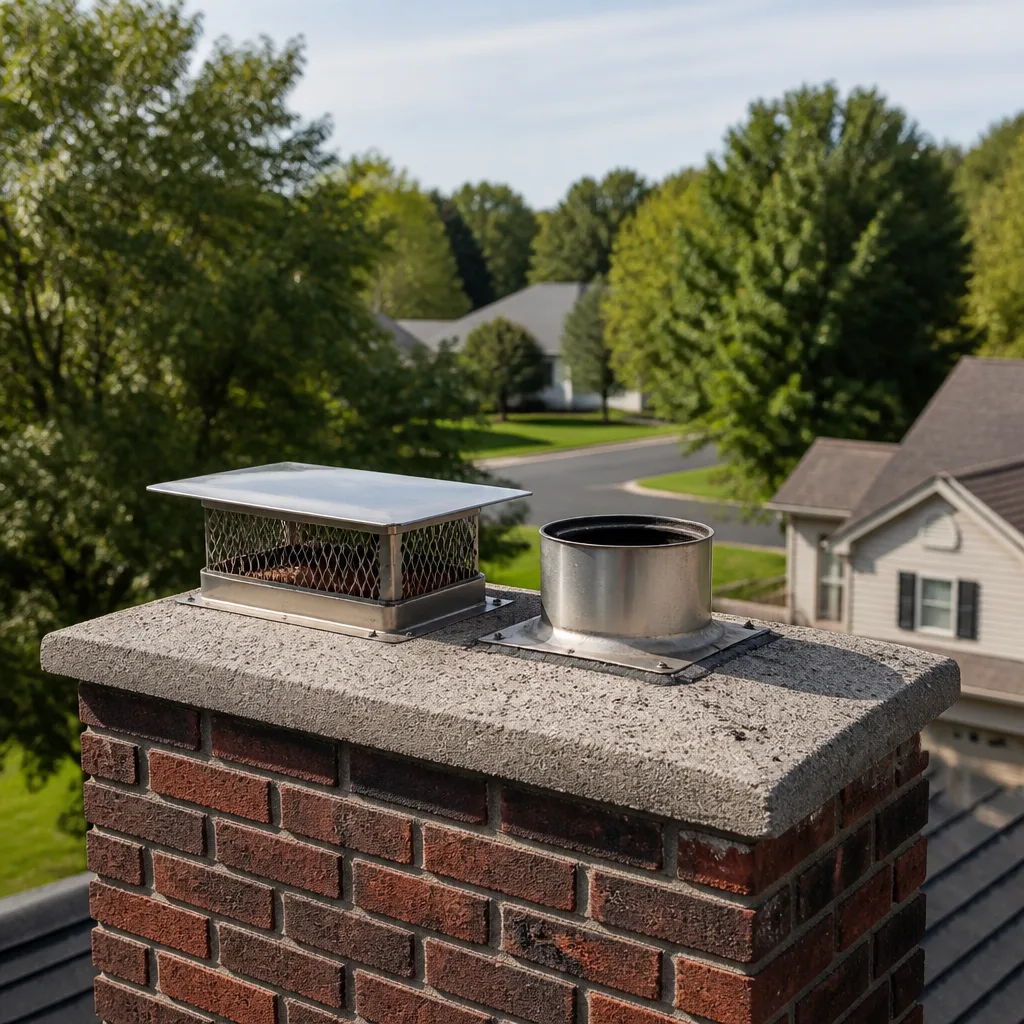 Sweep & inspection
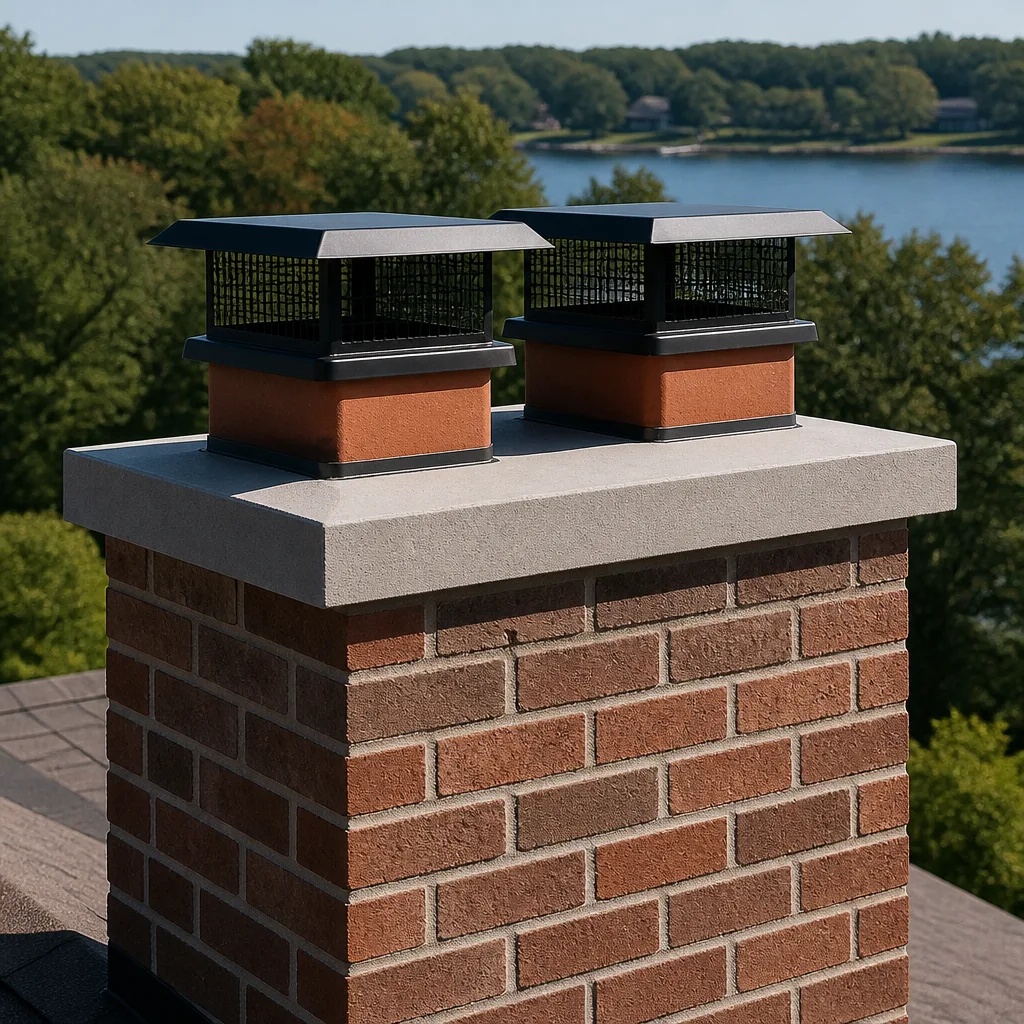 Caps & crowns
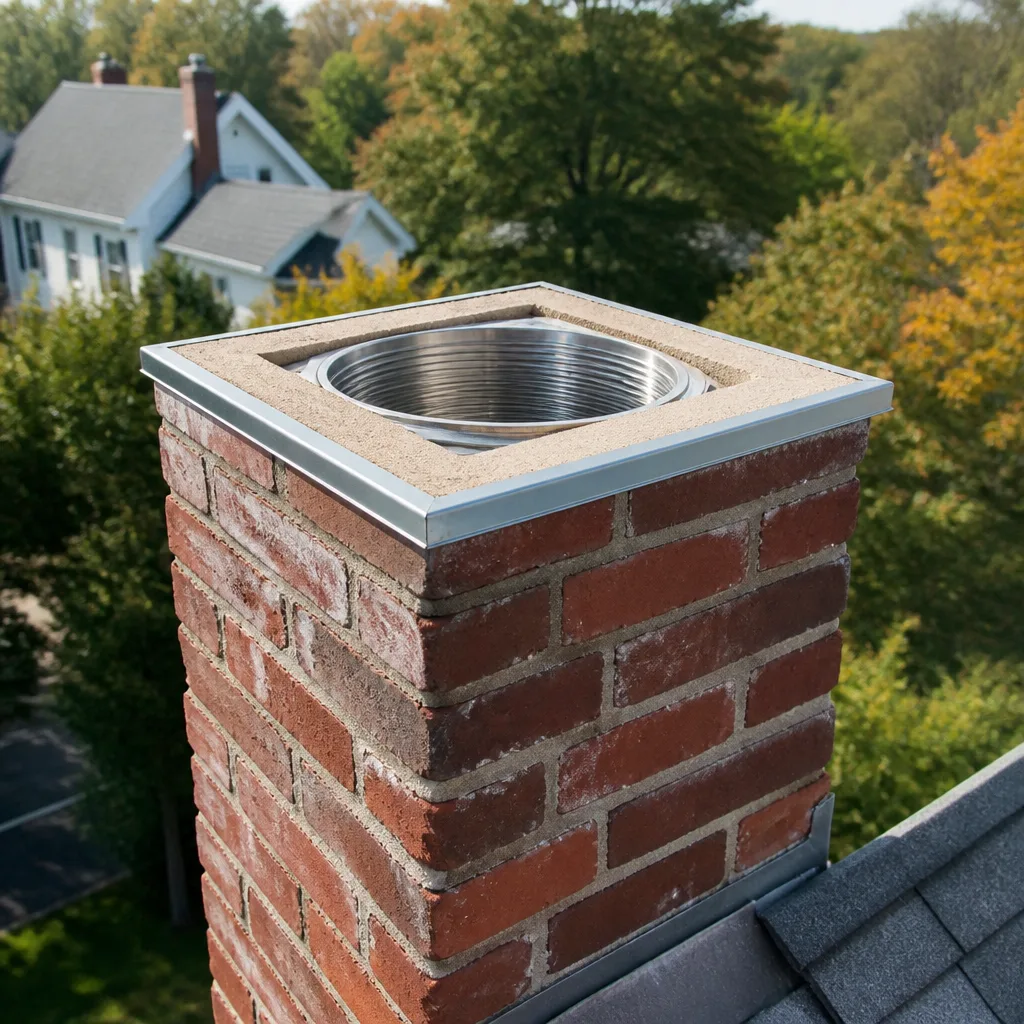 Flue relining
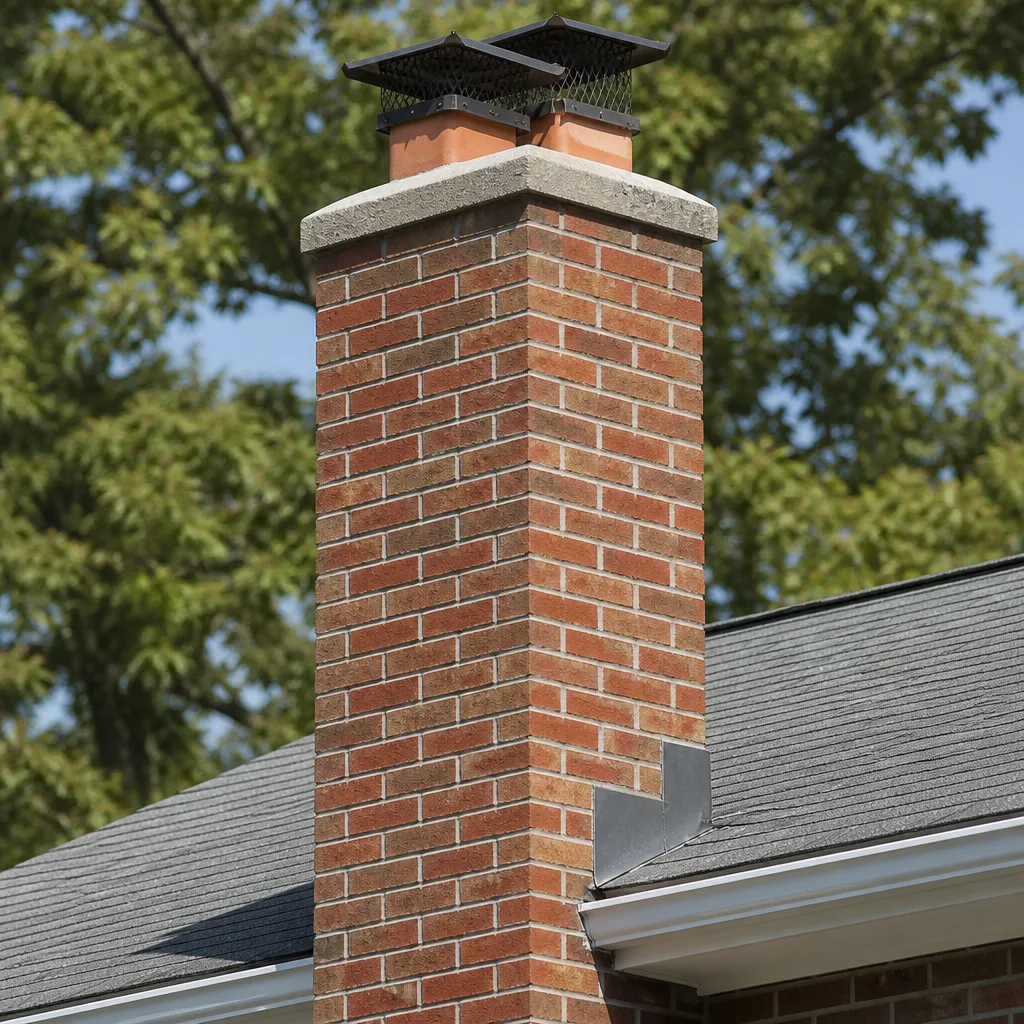 Masonry repair
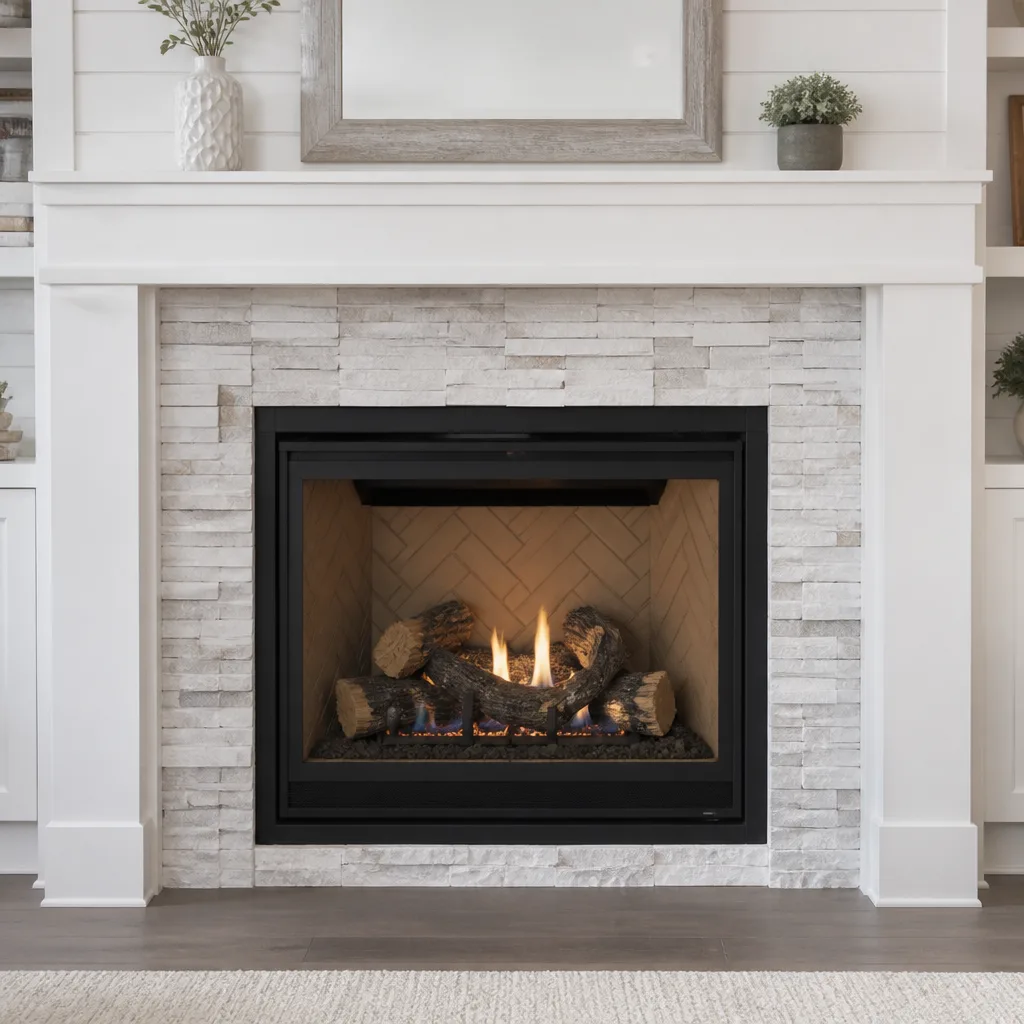 Gas fireplace service
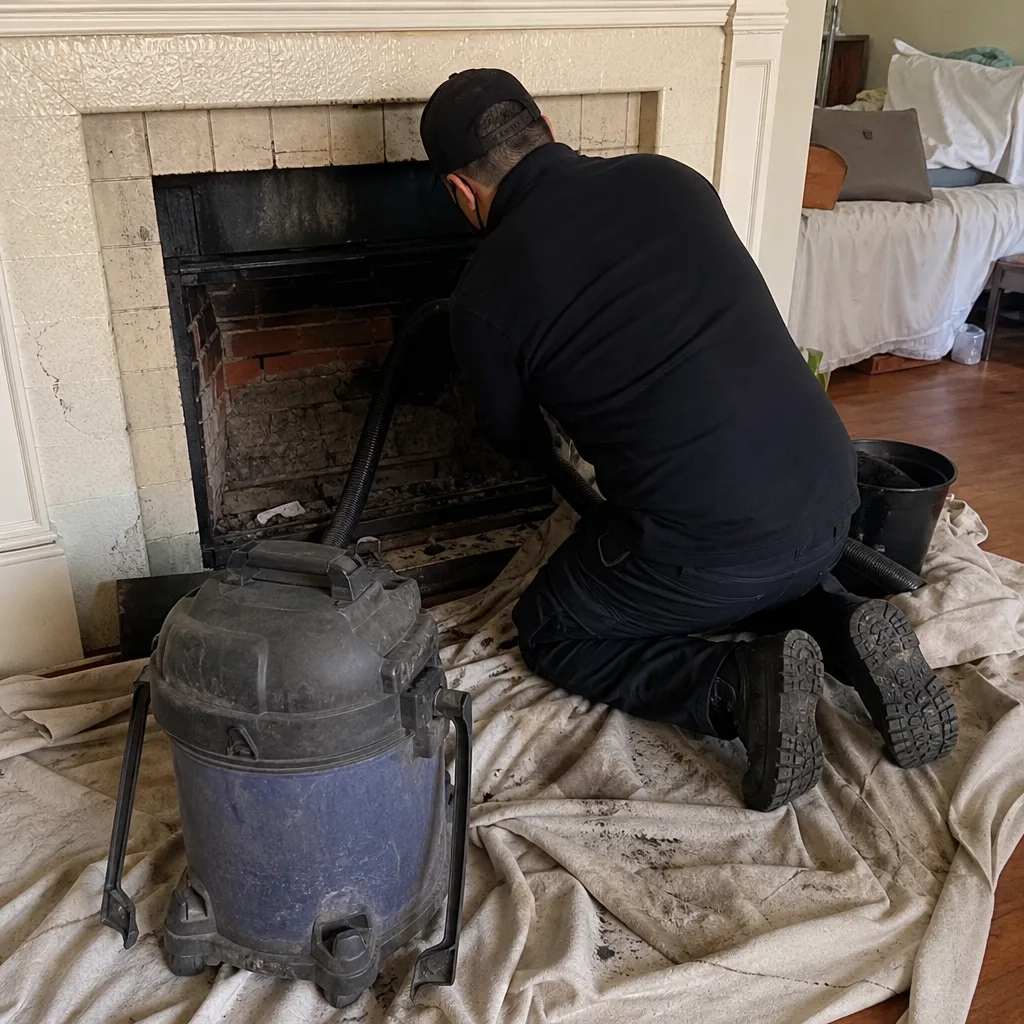
Level 1 sweep and inspection to the NFPA 211 annual standard - flue, crown, cap, and flashing checked and photographed
Chimney sweep logs do not sweep chimneys. They loosen some creosote - which then falls where a brush and vacuum still have to collect it.
Choosing the Right Chimney Cleaning Brand: A Buyer’s Guide for South Gate
Here’s a counterintuitive fact that surprises most South Gate homeowners: the chimney cleaning business has almost no barrier to entry. A person with a truck, a ladder, and a $40 brush set from a big-box store can call themselves a chimney sweep tomorrow. The difference between that operation and a contractor who works with professional-grade product lines isn’t just marketing. It’s the difference between a crown seal that lasts five years and one that cracks by next winter. This guide gives you the product literacy to tell the two apart, so you can ask the right questions before anyone climbs onto your roof. For more guidance, see The Complete Chimney Sweep Guide for South Gate Homeowners.
Styles & brands we work with
- Sweep & inspection
- Caps & crowns
- Flue relining
- Masonry repair
- Gas fireplace service
Quick Answer
The right chimney cleaning brand isn’t the one with the biggest ad budget. It’s the contractor who can name the specific products they use, explain why, and show that those products come from professional industry manufacturers like HeatShield, Gelco, or Olympia Chimney rather than whatever’s on the shelf at the local hardware store. In South Gate, where older housing stock meets coastal humidity and wildfire season, that distinction determines whether your chimney repair lasts five years or fifteen.
Table of Contents
- Why the Brand on the Can Matters More Than the Name on the Truck
- The Six Product Categories That Decide Whether Your Repair Lasts
- The Brands Professionals Actually Use: What Each One Is Known For
- Reading a Liner Spec Sheet: What to Look For Before You Approve a Reline
- How to Ask About Products Without Sounding Adversarial
- Red Flags in Material Specification: What Vague Answers Usually Mean
- What South Gate’s Climate and Housing Stock Mean for Product Choice
- Common Mistakes to Avoid
- When to Call a Professional
- Frequently Asked Questions
- The Bottom Line
Why the Brand on the Can Matters More Than the Name on the Truck
When a chimney contractor says they’re going to “seal your crown,” that could mean a brush-applied elastomeric compound rated for ten-plus years of thermal cycling, or a hardware store concrete patch that’ll crack by next winter. Both answers use the same words. The only way to know which one you’re getting is to ask what product they’re using and why they chose it.
Here’s what we’ve seen across hundreds of chimneys in South Gate and the surrounding Southeast LA corridor: the failure point in most chimney repairs isn’t the labor. It’s the material. A sweep who knows how to run a brush but buys commodity-grade supplies is handing you a repair with an expiration date. A sweep who specifies professional product lines is, almost by definition, someone who’s invested in learning the trade rather than just picking up a side hustle.
Think of it like auto repair. You can put the same mechanic in a garage with OEM parts or with the cheapest aftermarket alternatives. The hands are the same. The outcome isn’t. Chimney work is no different, except that a failed chimney crown or a flue liner that separates doesn’t just cost you money. It can put combustion gases where they don’t belong. That’s a fire and carbon monoxide issue, not just an inconvenience.
In our experience running Chimney Sweep South Gate home services across South Gate, the homeowners who get the longest life out of their repairs are the ones who asked one question before approving the work: what are you using, and who makes it?
The Six Product Categories That Decide Whether Your Repair Lasts
Chimney work isn’t one product. It’s a system, and each component has a professional-grade tier and a commodity-grade tier. Understanding these six categories gives you a mental checklist for evaluating any contractor’s material choices.
1. Chimney Brushes
A professional chimney brush isn’t just a wire bristle on a stick. The good ones are made from spring-tempered steel or high-grade polypropylene that holds its shape through hundreds of sweeps. Cheap brushes shed bristles inside flues, bend out of shape, and leave creosote behind. When a contractor shows up with a professional rotary brush system, that’s a signal they clean chimneys often enough to justify the equipment cost.
2. Sealants and Caulks
Here’s where the biggest brand gap lives. Professional chimney sealants are engineered for thermal expansion, UV exposure, and flue gas contact. A proper crown sealant will flex as the chimney heats and cools. A hardware store silicone won’t, and it’ll separate from the masonry within a season or two. The difference in material cost between a professional-grade sealant and a generic one is maybe forty dollars. The difference in a repair that has to be redone next year is four figures.
3. Crown Coatings
The chimney crown is the concrete slab at the top of the chimney, and it’s the first thing to fail on most South Gate homes because it’s fully exposed to rain, sun, and temperature swings. Professional crown coating systems are two-part elastomeric products that bridge hairline cracks and remain flexible. Commodity alternatives are basically paint. A proper crown coating can buy a chimney ten more years. A coat of paint buys you a season.
4. Liner Systems
The flue liner is the most expensive component in a chimney repair, and the brand on the box matters more here than anywhere else. Professional stainless steel liner systems from brands like Olympia Chimney are welded, corrugated, and specified for specific appliance classes. Their spec sheets state the alloy grade, the temperature rating, and the clearance-to-combustibles allowance. A generic liner may not hold up to a gas appliance’s acid condensate or a wood stove’s high temperatures. This is the one category where cutting corners on the material is genuinely dangerous.
5. Caps and Terminations
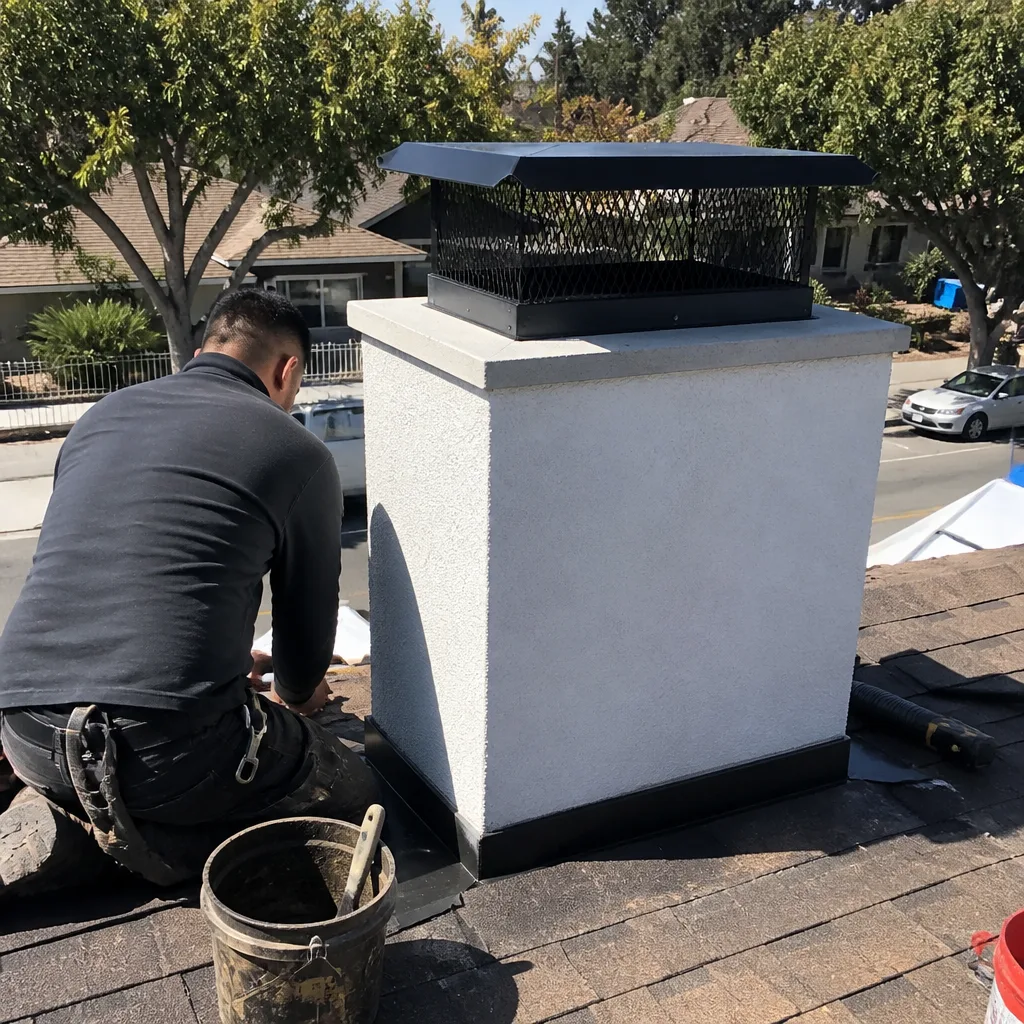
A chimney cap keeps rain, animals, and debris out of the flue. Professional cap systems are powder-coated or stainless steel, sized for the specific flue dimensions, and designed to prevent backdrafting. The Famco line is a good example of a professional ventilation manufacturer whose caps and terminations are built to spec rather than one-size-fits-all. A cheap cap that doesn’t fit properly can cause a draft inversion that pushes carbon monoxide back into the house.
6. Dampers
A top-sealing damper is one of the best efficiency upgrades a chimney can get, but the quality of the seal is everything. Professional damper systems use gasketed stainless steel or cast aluminum with silicone seals that prevent air leakage. Cheap dampers warp, stick, and stop sealing after a couple of heating seasons. This is a category where the product brand is often visible on the unit itself, so you can check what you’re getting.
The Brands Professionals Actually Use: What Each One Is Known For
You don’t need to become a chimney product expert. You need to know enough to recognize whether your contractor is speaking the language of the trade or making things up. Here are a few benchmark names in professional chimney work, what each is known for, and why they matter.
HeatShield is the name most often associated with ceramic flue resurfacing. Instead of a full liner replacement, which can run into the thousands and require demolition, HeatShield’s cerfractory material is pumped into the flue to fill cracks, rebuild spalled masonry, and create a smooth, insulated surface. Most general handymen cannot perform or even recommend this repair because it requires specific training and equipment. When a contractor tells you they can resurface a flue rather than reline it, HeatShield is the product they should be referencing. It’s a legitimate, tested alternative to a full reline for many mid-life flues.
Gelco is a manufacturer of professional chimney and masonry sealants and coatings. In the professional sweep world, Gelco products are known for being engineered for chimney-specific conditions rather than borrowed from general construction. Their crown repair systems, water repellents, and flue sealants are formulated for thermal shock, not just standing water. If a contractor can name Gelco as what they use for crown work, that’s a strong signal they’ve gone beyond the hardware store paint aisle.
Olympia Chimney is a well-established manufacturer of stainless steel chimney liners and venting components. What matters about Olympia is that their liner systems are tested and listed for specific fuel types: gas, oil, wood. When a homeowner faces a reline job in South Gate, where many homes have older masonry chimneys that were never designed for modern gas appliances, a listed liner system is what makes the repair legal and safe. The brand on the spec sheet is your evidence that the product was engineered for the job.
You’ll also hear professional contractors reference Famco for ventilation caps, terminations, and related components. Famco is a long-standing manufacturer in the HVAC and ventilation industry, and their presence in a contractor’s product mix suggests fluency beyond basic brush-and-vacuum sweeping.
The broader point here isn’t that you should demand a specific brand. It’s that a contractor who works with professional product lines has made a deliberate investment in material quality. A contractor who can’t name a single product brand is shopping for whatever’s cheapest that week. At Chimney Sweep in South Gate, that distinction is built into how we select materials for every job.
Reading a Liner Spec Sheet: What to Look For Before You Approve a Reline
A chimney reline is one of the most expensive repairs a South Gate homeowner will ever approve for their chimney, and most people approve it without ever seeing a spec sheet. That’s a mistake. Here’s what to look for before you sign off.
- Alloy grade. Professional stainless liners are typically 316L or 316Ti alloy for gas and oil applications because those alloys resist the acid condensate that modern high-efficiency appliances produce. A 304 alloy liner is fine for wood in many cases but may not hold up long-term with gas. If the contractor can’t tell you the alloy grade, the liner probably came from a generic supplier.
- Listing and testing. Look for a UL listing or equivalent independent testing certification that matches your appliance type. An unlisted liner isn’t necessarily unsafe, but it means no independent lab has verified its performance at the temperatures and conditions your flue will produce.
- Wall thickness and construction. Corrugated liners are standard. The pitch of the corrugation and the weld seam quality affect how well the liner handles thermal expansion and how easily it can be cleaned. Cheap liners have shallow corrugations and visible seam inconsistencies.
- Insulation requirements. For wood-burning appliances, an insulated liner is often required by code to maintain proper draft and protect surrounding masonry. For gas appliances, the requirements vary. A spec sheet that doesn’t address insulation is incomplete.
- Warranty language. This is a big one. Professional liner manufacturers offer warranties of 20 years to lifetime, but those warranties are almost always tied to installation by a certified or trained contractor. If your contractor can’t show you the manufacturer’s warranty document and explain who files the claim, the warranty likely doesn’t exist in any meaningful form.
This is where asking for the product name matters most. A DuraFlex liner system is a professional-spec product with published specifications and a real warranty structure. A “stainless steel liner, no brand” is an unknown quantity. The material difference might be a few hundred dollars. The risk difference is measured in years.
How to Ask About Products Without Sounding Adversarial
Homeowners sometimes hesitate to ask about material brands because they don’t want to seem like they’re challenging the contractor’s expertise. Here’s the thing: any professional who’s proud of their material choices will welcome the question. It’s the guy who gets defensive who’s telling you something useful.
Here’s a framing that works well in practice.
- Open with curiosity, not skepticism. “I’ve been reading about chimney repairs, and I’m curious what products you tend to use for crown sealing. I know there’s a big difference between some of the professional elastomerics and the basic stuff.” This signals you’ve done homework without accusing anyone.
- Ask about the “why.” “What makes that sealant a good fit for this climate?” This gives the contractor room to demonstrate expertise. A professional will talk about thermal cycling, UV resistance, and Sacramento Valley moisture. A handyman will say it’s “good stuff.”
- Ask for the spec sheet. For any significant repair, especially a reline, say: “Would you be able to send me the product spec sheet and warranty info before we schedule?” A professional will have this available. A contractor who stalls or says “I don’t have that handy” is telling you the product selection isn’t something they control or think about.
- Watch how they respond to being questioned at all. A professional who is secure in their craft treats questions as part of the education process. A contractor who gets annoyed or dismissive is usually covering for something. Trust that instinct.
In our experience working across South Gate, the homeowners who ask these questions get better repairs. It’s not that the questions magically improve the materials. It’s that contractors who know they’ll be asked are the ones who use better materials in the first place.
Red Flags in Material Specification: What Vague Answers Usually Mean
After enough chimney inspections, certain patterns start to predict outcomes. Here are the specific warning signs we’d tell a family member to watch for when a contractor won’t get specific about products.
- “Professional sealant” with no product name. Every manufacturer puts a name on the bucket. If the contractor uses “professional” as the name, they’re hoping you won’t know the difference. Ask for the brand. Every time.
- No temperature or fire ratings mentioned. Chimney products are rated for specific conditions: temperature maximums, clearance requirements, fuel compatibility. A contractor who never mentions ratings is either using unrated products or doesn’t know the ratings of what they’re using. Neither is reassuring.
- Resistance to sharing product names. A contractor who gets cagey about what they’re using is usually protecting their markup, not their trade secrets. Professional products are widely available to licensed contractors. If the brand is a secret, the markup probably is too.
- “Same stuff the other guys use” as a product description. That’s a deflection. Different contractors use wildly different product tiers. If someone won’t say what they use, assume it’s the bottom of the market.
- Quotes that don’t specify materials. A professional quote for a crown repair will name the coating system. A professional quote for a reline will name the liner type, alloy, and insulation. A quote that just says “repair crown” or “install liner” leaves too much room for the cheapest possible interpretation.
This is where Chimney Repair in South Gate becomes a useful reference point. When you call us, the products we’re going to use are part of the conversation, not a secret to be revealed later. That’s how we think it should work everywhere.
What South Gate’s Climate and Housing Stock Mean for Product Choice
South Gate has specific conditions that shape which chimney products make sense here. Understanding these will help you evaluate any contractor’s recommendations against reality, not just against a brochure.
First, the age of the housing stock. South Gate grew in the postwar boom, which means a lot of masonry chimneys built in the 1950s through the 1970s. Those chimneys were designed for wood-burning fireplaces and built with clay tile liners. Clay tile liners from that era have a design life of roughly 50 years. Most of them are now past it. When those liners crack, the gap between the tile sections becomes a path for heat and gases to reach combustible framing. A HeatShield ceramic resurfacing or a stainless steel reline using a listed system like Olympia Chimney’s products is what makes those older chimneys safe to use again.
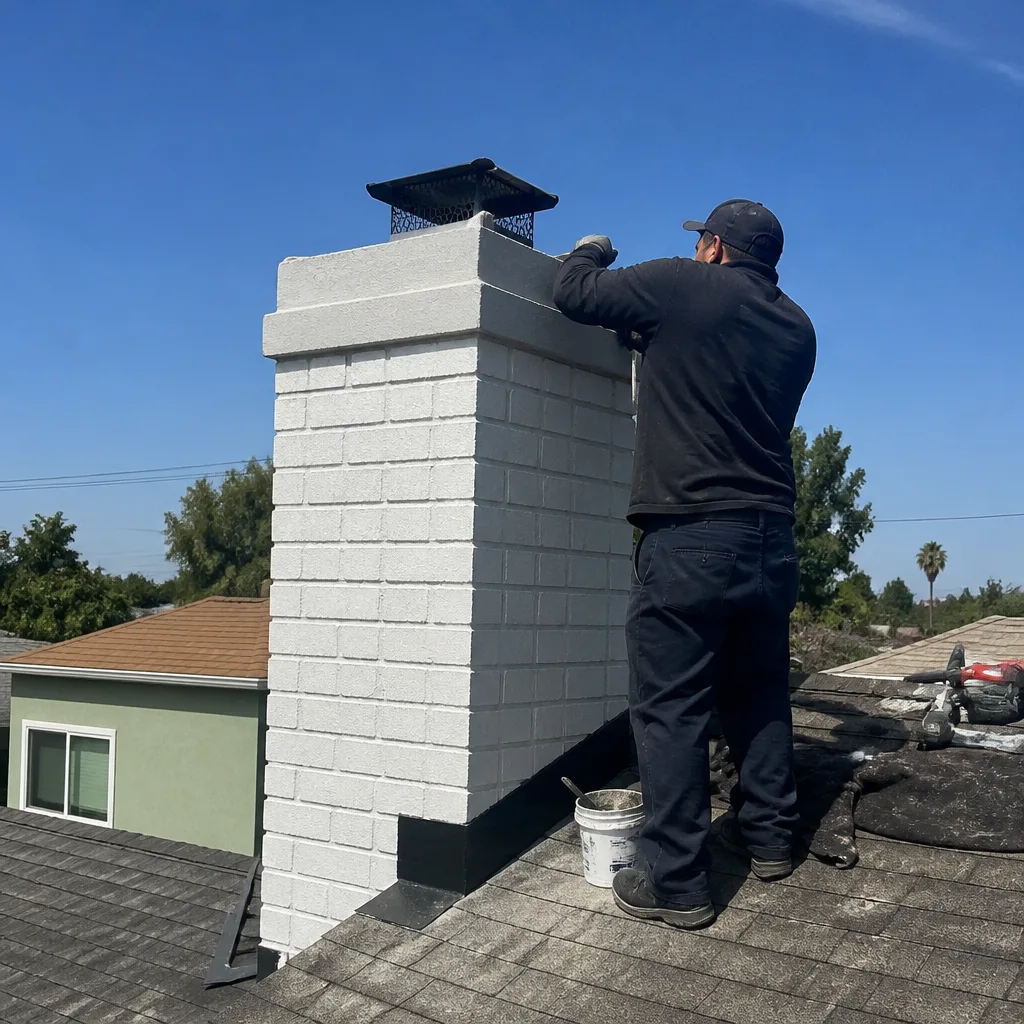
Second, the climate. South Gate is coastal-adjacent, which means we get temperature swings, morning marine layer moisture, and occasional heavy rain. That combination is brutal on chimney crowns and exposed masonry. Every winter, the masonry absorbs water. Every summer, it dries and shrinks. Over decades, that cycle opens hairline cracks that then widen. A professional elastomeric crown coating, like the kind found in the Gelco product line, moves with that thermal cycle. A rigid patch doesn’t.
Third, the reality of wildfire season. South Gate isn’t in the same fire zone as the foothills, but we’re close enough that air quality rules, burn days, and fire safety awareness shape how people think about their chimneys. A properly lined, well-maintained chimney isn’t just efficient. It’s also less likely to throw sparks or fail during the kind of wind event that turns a small chimney issue into a house fire.
The combination of aging clay tile liners, moisture cycling, and fire season makes South Gate a place where product quality genuinely matters. What works in a newer development in Orange County may not be the right answer for a 1963 ranch house in South Gate. The right contractor thinks about that. The wrong one doesn’t.
Common Mistakes to Avoid
- Approving a quote without material names. A quote that says “crown repair” without specifying the product is a blank check for the cheapest possible material. Ask for the brand and product line before you approve anything.
- Assuming all stainless liners are the same. They’re not. Alloy grade, wall thickness, insulation, and listing status all vary widely. A liner that costs $400 less is cheaper for a reason, and that reason usually reveals itself in five to eight years.
- Treating chimney sweeping and dryer vent cleaning as separate problems. Both are exhaust systems, both accumulate flammable material, and both need the same kind of professional attention. The same contractor should be able to handle both. If your chimney sweep doesn’t offer Dryer Vent Cleaning in South Gate, that’s a sign they may be a brush-and-vacuum operation rather than a full exhaust system professional.
- Believing a “seal” is permanent. All chimney components eventually wear. Crown coatings last 10 to 15 years in South Gate’s climate if they’re professional-grade. Liners last 20 to life depending on fuel type and maintenance. Anyone who says a repair is “permanent” is selling something.
- Skipping the inspection because “it was just cleaned.” A cleaning tells you the flue is clean at that moment. It doesn’t tell you whether the liner is cracking, the crown is failing, or the damper is warped. If your sweep doesn’t include a visual inspection with the cleaning, you’re getting half the service.
- Choosing a contractor based on a coupon. Discounted chimney cleanings are often loss leaders for aggressive upsells, or worse, the work is done with commodity products and minimal care. The right way to choose is on material quality, inspection thoroughness, and the contractor’s willingness to answer questions.
When to Call a Professional
Some chimney issues are worth investigating yourself. Others are not. Call a professional if you see any of these: white staining on the exterior brick (that’s efflorescence, a sign of water intrusion through the chimney), cracking or spalling on the crown, a fireplace that produces smoke or soot even with the damper open, a strong odor from the fireplace during humid weather, or a dryer that takes longer than 45 minutes to dry a normal load. All of these indicate a system problem, not a surface issue. Chimney Sweep South Gate offers free estimates in South Gate, and we’ll walk you through exactly what we’re seeing and why, product names included. Call (833) 958-8849 to schedule.
Frequently Asked Questions
Look for a contractor who can name specific professional brands like HeatShield, Gelco, or Olympia Chimney and explain what they use each product for. The specific brand matters less than the contractor’s ability to discuss it fluently. That’s the difference between a professional and someone buying whatever the hardware store has on sale. Call (833) 958-8849 for a free estimate and ask us directly.
Chimney cleaning in South Gate typically runs $150 to $350 depending on flue size, accessibility, and condition. For a deeper look at what’s involved, see The Complete Chimney Sweep Guide for South Gate Homeowners. Homes with heavy creosote buildup or hard-to-reach roofs on the city’s older streets may cost more. The best way to get an accurate number is to schedule an inspection. Estimates are free at (833) 958-8849.
A cleaning removes the creosote and soot from the flue. An inspection evaluates the condition of the liner, crown, cap, damper, and masonry. A professional chimney sweep should do both at the same visit. If a contractor offers a cleaning without an inspection component, you’re getting half the service you’re paying for.
Many mid-life chimneys in South Gate can be resurfaced with HeatShield ceramic rather than fully relined. Resurfacing fills cracks and rebuilds the flue surface without the demolition a full reline requires. But not every flue qualifies. The right answer depends on the condition of the existing liner, which requires a camera inspection to assess. We show you the footage so you can see the condition for yourself before deciding.
Once per year for wood-burning fireplaces, and every two to three years for gas fireplaces used regularly. South Gate’s humid coastal air causes moisture to combine with creosote, which accelerates liner deterioration. If you burn more than a cord of wood per year or notice a campfire-like smell from your fireplace, sweep more often. Call (833) 958-8849 to schedule an inspection and we’ll give you a straight answer.
Creosote builds up, and if it reaches 1/8 inch thickness or more, it becomes a genuine fire hazard. The smoke chamber fills with ash and flammable debris. Moisture ingress through a failing crown accelerates liner damage. By the time a homeowner notices the symptoms, the repair is usually more expensive than the cleanings they skipped. The math almost never works in favor of skipping.
The Bottom Line
The right cleaning brand isn’t a logo. It’s a discipline. It’s a contractor who can tell you exactly what they’re using and why, who works with professional product lines because they hold up in South Gate’s climate, and who stands behind the materials they choose. You don’t need to become a chimney product expert to hire well. You need to ask the two questions that separate professionals from everyone else: what are you using, and why did you choose it? The contractor who answers well is the one you want on your roof. Chimney Sweep South Gate home serving South Gate since 2013, uses professional-grade products including HeatShield, Gelco, Olympia Chimney, and Famco. Call (833) 958-8849 for a free estimate.
Written by the team at Chimney Sweep South Gate, serving South Gate since 2013. Explore more guides & resources from our team.
See the difference
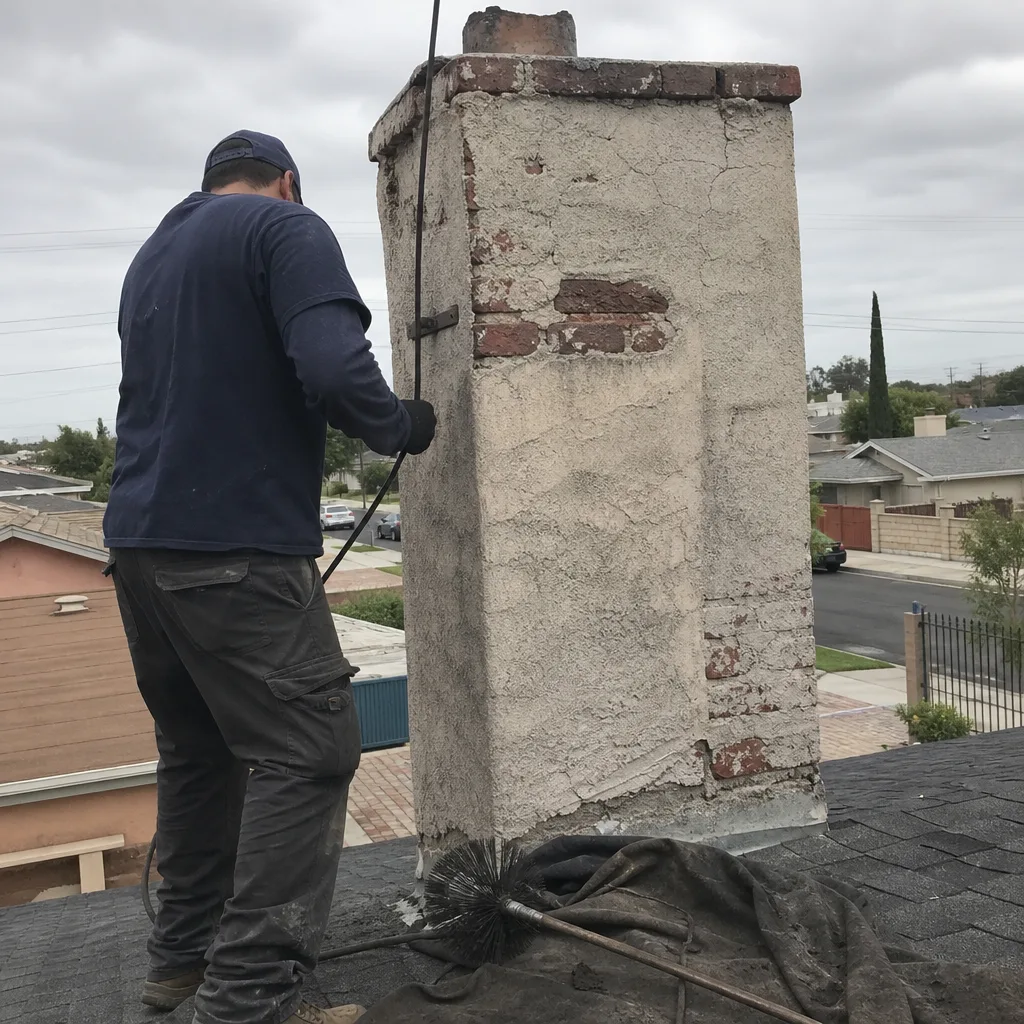 Before
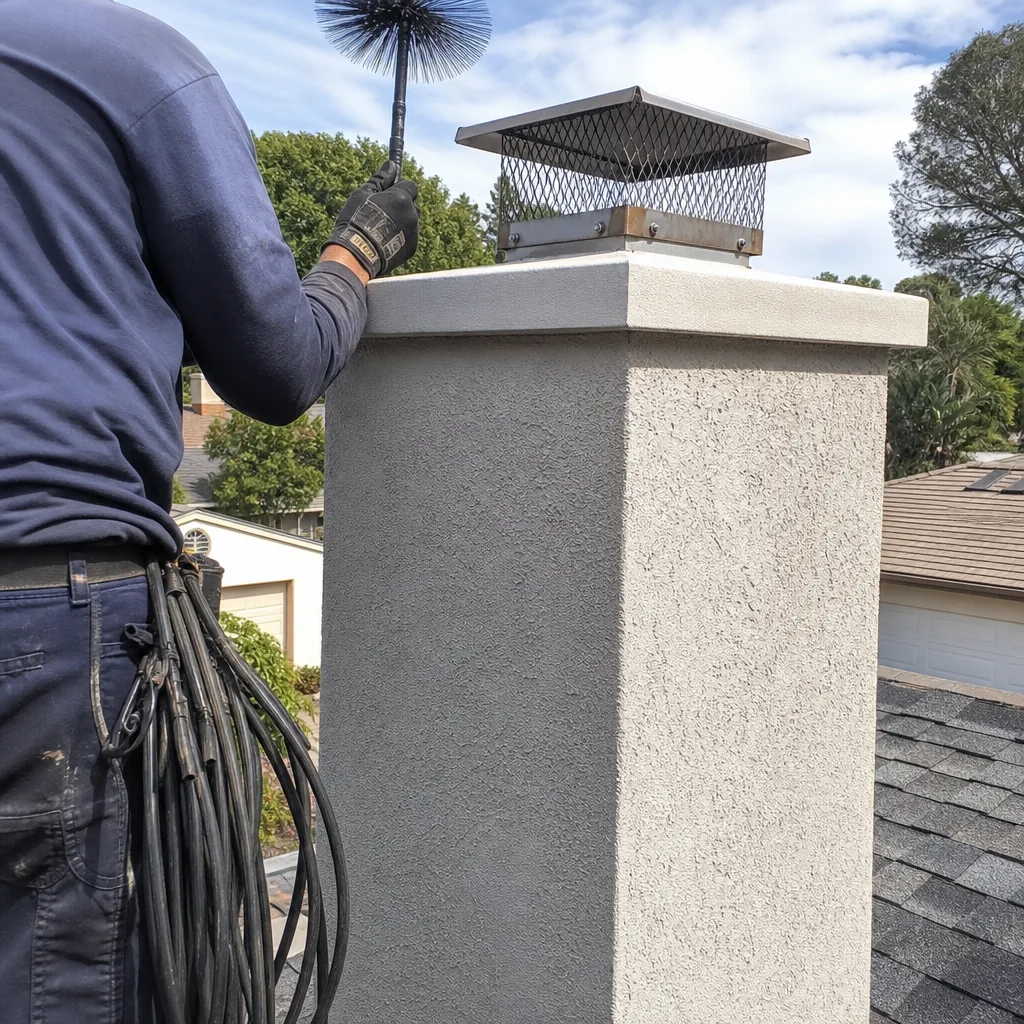 After
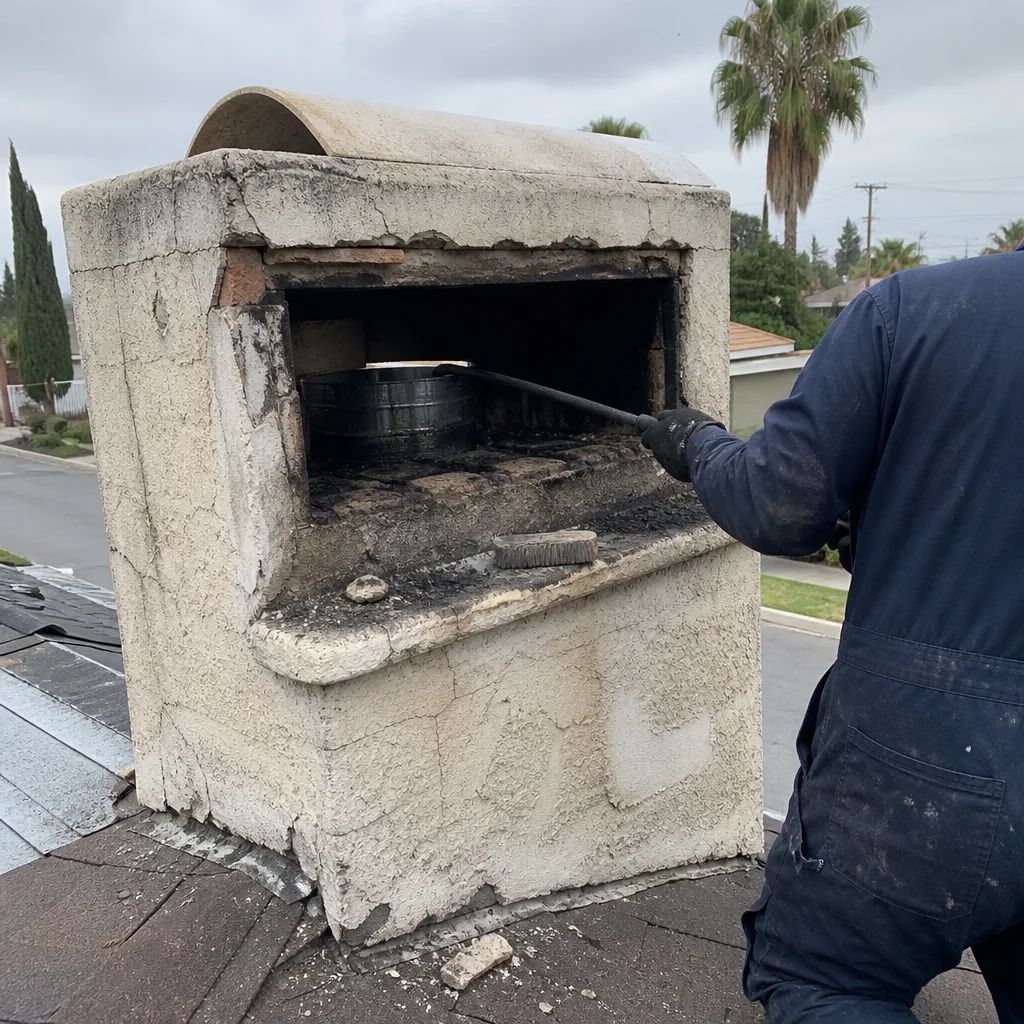 Before
 After
 Before
 After