
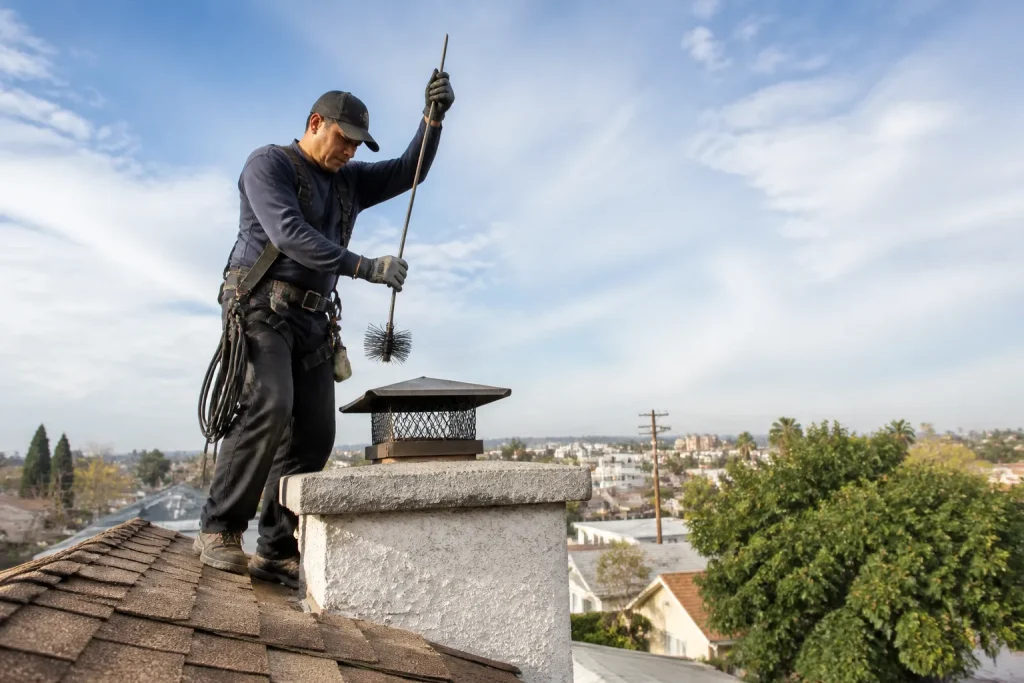
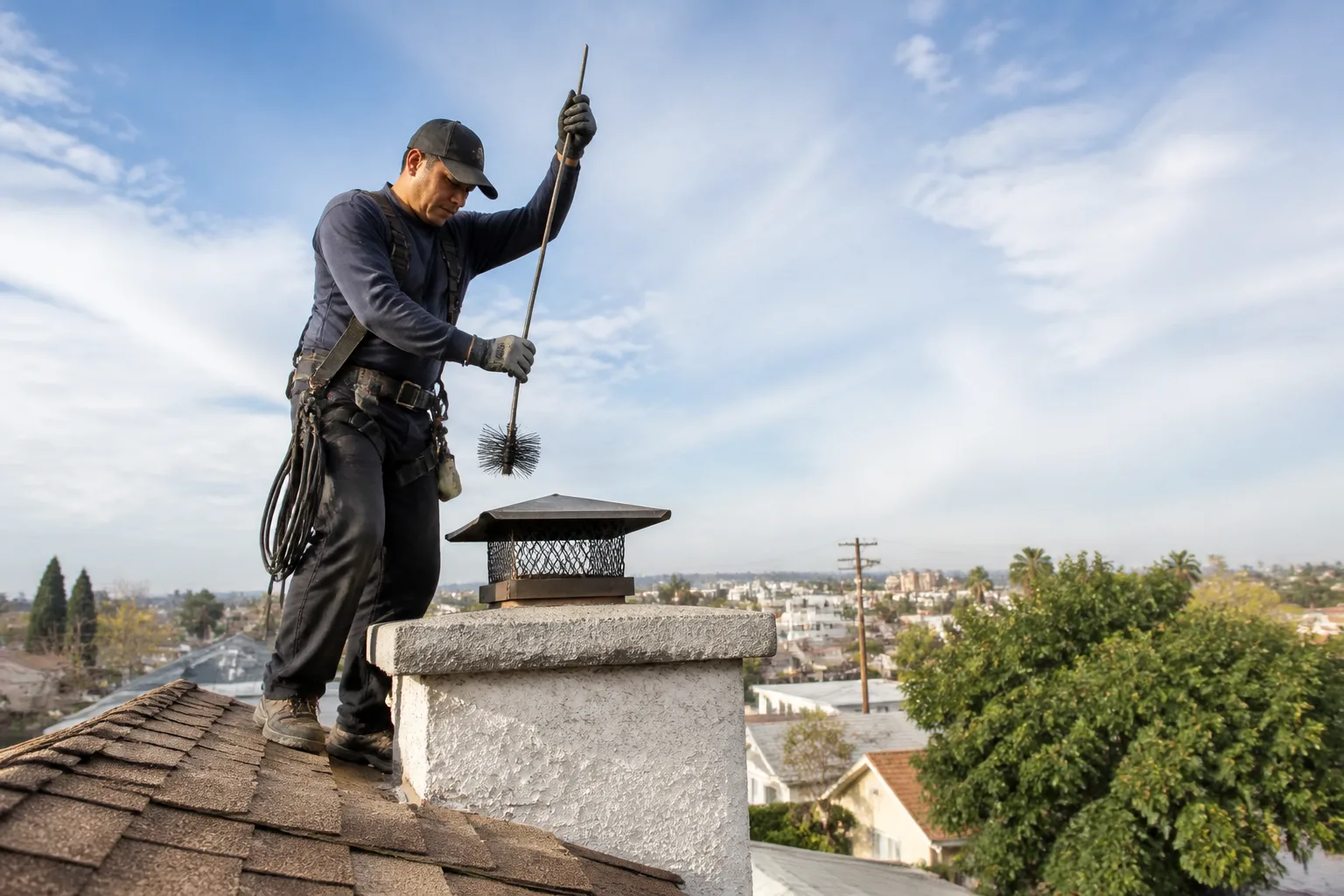
DuraFlex Chimney Sweep in South Gate: A Homeowner’s Guide
DuraFlex is a flexible stainless steel chimney liner system used when a chimney’s flue is too irregular, offset, or deteriorated for a rigid liner to work. In South Gate, where many homes date from the 1940s through the 1960s, we regularly encounter flues that were built with handmade terra cotta tiles, odd angles, and settle-induced offsets that make rigid stainless steel impossible to install without tearing out brick. DuraFlex solves that problem, but it’s not the right answer for every chimney, and we’ll explain how to tell the difference. If you’d rather skip the reading and talk through your specific situation, call (833) 958-8849.
What DuraFlex Actually Is (and What It Isn’t)
DuraFlex is a flexible stainless steel liner manufactured specifically for chimney relining. Unlike rigid stainless steel pipe, which comes in straight segments that must be welded or mechanically joined, DuraFlex arrives as a continuous coil that can be pulled through a chimney with bends, offsets, or slightly misaligned flue tiles. Once installed, it creates a continuous stainless barrier between combustion exhaust and the surrounding masonry. That’s the core job of any chimney liner: keeping heat, carbon monoxide, and corrosive flue gases contained inside a tested, code-compliant passage instead of leaking through cracked mortar into wall cavities or living spaces.
Here’s the thing most South Gate homeowners don’t hear from salespeople: DuraFlex is not automatically better than rigid. It’s better in specific conditions. A straight, well-built flue that has mild cracking is often best served by a rigid liner or a HeatShield ceramic resurfacing, both of which we use depending on the flue’s condition. DuraFlex earns its cost when the flue geometry makes rigid installation impractical, when the chimney has an offset, or when the existing clay tiles have shifted enough that anything rigid would hang up. Installing DuraFlex where a rigid liner would work costs more without a performance benefit. The right material for the job is the one that matches the flue’s actual failure mode.
Why Older South Gate Homes Often Need Flexible Liners
South Gate’s housing stock is dominated by single-family homes built in the post-war boom and the mid-century expansion. Many of those chimneys were constructed with clay tile flues and mortar that has now weathered six or seven decades of thermal cycling. Southern California’s seismic activity does not help. A series of small earthquakes over decades can shift chimney masonry a fraction of an inch at a time. The result is a flue that may look fine from the fireplace opening but actually has offset joints, hairline cracking, or a slight bow midway up that you can’t see without a camera.
Those conditions are exactly what flexible liners were engineered for. We’ve pulled DuraFlex liners through South Gate chimneys where the offset was pronounced enough that three separate rigid liner attempts by other contractors had failed. The flexibility absorbs the path, but it still provides a smooth, continuous inner wall that resists creosote accumulation far better than crumbling clay.
For homes near Tweedy Boulevard or in the neighborhoods east of South Gate Park, we also see a specific pattern: fireplaces that were used heavily in the 1960s and 1970s, then sealed up when furnaces took over. The flues sat dormant for decades, condensation worked on the mortar, and now they are falling apart from the inside out. DuraFlex gives those chimneys a second life without a full masonry rebuild.
How the Installation Process Works
Installing a DuraFlex liner is not a one-person job and it’s not something a general contractor should handle. The process requires specialized tooling: a winch, a pulling cone, proper insulation where code requires it, and the experience to know when a flue needs prep work before the liner goes in. Here’s the sequence we follow on a typical South Gate installation:
- 1
Sweep first. The existing flue has to be cleaned down to bare clay before a liner goes in. Installing a liner over creosote buildup traps a fuel source between the liner and the chimney wall, which is exactly what you don’t want.
- 2
Camera inspection. We run a camera through the flue to document the condition, measure the offset, and confirm what the liner will need to navigate. Nothing gets recommended without photo evidence you can see for yourself.
- 3
Prep the flue. If broken tile shards or offset edges would snag the liner during the pull, those get addressed first. On some South Gate chimneys, that means breaking out protruding clay before the liner enters.
- 4
Lower and pull. The liner is fed from the top, guided by a pulling cone attached to a winch line at the bottom. It gets pulled through in one continuous piece, which is why flexible liner works where rigid cannot.
- 5
Connect and seal. The liner gets secured to the appliance connector or the smoke chamber, the top gets a proper termination cap, and the annular space gets insulated where local code and the manufacturer’s installation requirements call for it.
- 6
Final camera pass. We document the installed liner, confirm the connections, and hand you the photos. You should never be asked to trust a verbal “all good” after a liner install.
How to Verify the Job Was Done Right
When the crew finishes and hands you the invoice, there are specific checks you can make before they leave. These apply to any chimney liner install, not just ours. First, ask for the camera footage. A properly documented installation includes before-and-after imagery showing the liner seated correctly and the termination cap attached. If the contractor can’t or won’t show you photos from inside the flue, that’s a red flag.
Second, confirm the liner is the correct diameter for the appliance it serves. A liner that’s oversized for a wood-burning fireplace will cool flue gases too quickly, which accelerates creosote condensation. Undersized creates draft problems and can push smoke back into the room. The sizing should be calculated, not guessed.
Third, verify the top termination. A proper DuraFlex installation ends at the top with a cap designed for the liner system, not a leftover clay pot crown with gaps around it. Wind-driven rain entering the annular space between the liner and the old flue accelerates masonry deterioration from the inside, and in South Gate’s occasional heavy storm seasons, that’s a real issue.
Finally, the liner should be pulled taut without sagging. A liner that bunches or hangs has a weak point that will fail early. Tautness is a sign the installer knew how to run the winch properly.
Realistic Lifespan and Annual Maintenance
A correctly installed DuraFlex liner in a fireplace that’s used seasonally can last two decades or more. We don’t put a hard number on it because lifespan depends on three variables: what you burn, how often, and whether the chimney gets annual service. Burn unseasoned wood and the liner gets bathed in acidic creosote that shortens its life. Burn properly dried hardwood and keep the fires reasonable, and the stainless has very little to fight.
Annual maintenance on a DuraFlex-lined chimney is straightforward. The sweep is actually easier than on bare clay because the smooth stainless wall releases creosote more readily, but it still has to happen. We recommend a full sweep and camera inspection every year for wood-burning systems, including checking the liner for any deformation, pitting, or separation at the joints. The top cap also needs a visual check, since birds and wind can loosen terminations over time. For South Gate homeowners who use their fireplace only occasionally, every 12 months still holds; creosote doesn’t care how often you light a fire, only whether the conditions inside the flue let it condense.
When to Call a Pro
If you see flaking tile pieces in your firebox, smell a campfire odor in the house when the fireplace hasn’t been used in days, or notice white staining on the exterior brick, those are signs the flue is compromised. A flexible liner may be part of the fix, but it also may not be the full answer. Some South Gate chimneys with exterior spalling or severe crown damage need masonry work before a liner makes sense. Installing a DuraFlex liner into a chimney with a failing crown is like putting new exhaust components on a car with a cracked manifold: you’ve fixed one part of the system but the other problem keeps eating away at it.
Our advice is to start with a sweep and a camera inspection. It’s the only way to know what’s actually happening inside the flue, and in our experience, South Gate homeowners are better served by seeing the damage with their own eyes than by taking anyone’s word for it. We pulled one out of a garage over near South Gate Park last month where the homeowner had been told by another company that his entire chimney needed a $9,000 rebuild. The camera showed two cracked tiles and a serviceable flue otherwise. A HeatShield resurfacing resolved the issue for a fraction of that quote, and we showed him the footage before and after.
Related services in South Gate: if you’re not sure whether you need a liner at all, start with a Chimney Sweep in South Gate and camera inspection. If the flue has failed and needs attention, our Chimney Repair in South Gate service covers liner installation, masonry work, and crown repair. And while we’re in the house, we also check Dryer Vent Cleaning in South Gate because lint-blocked exhaust is one of the most common fire hazards we find in the same homes.
The Bottom Line
DuraFlex is a professional-grade solution for chimneys with flue geometry that rigid stainless cannot handle, and South Gate’s aging housing stock produces plenty of those conditions. But the liner is only as good as the installation, and the installation is only as good as the inspection that identified the real problem in the first place. If you know your flue is compromised, or you’re getting conflicting opinions, get a camera inspection from an experienced sweep before committing to any liner work. We’ve been doing this long enough to know that the right answer is sometimes a liner, sometimes a resurfacing, and sometimes masonry repair, and the only way to tell is to look. If you’re in South Gate and want a straight answer with photo evidence, Chimney Sweep South Gate home offers free estimates. Call (833) 958-8849 and we’ll put a camera in your flue before anyone recommends anything.
Frequently Asked Questions
In South Gate, a DuraFlex liner installation typically runs from $2,800 to $5,500 depending on flue height, diameter, whether insulation is required, and the condition of the existing masonry. Shorter one-story chimneys sit at the lower end, while two-story homes with taller flues or prep work needed fall higher. Get a camera inspection before accepting any quote. Call (833) 958-8849 for a free estimate with photo documentation.
DuraFlex is better only when the flue has offsets, irregular geometry, or tile misalignment that would make rigid liner installation impractical or impossible. For a straight flue with minor cracking, a rigid liner or a HeatShield ceramic resurfacing often costs less and performs the same function. The right choice depends on what the camera shows inside your specific chimney.
A properly installed DuraFlex liner in a wood-burning fireplace used seasonally can last 20 years or more. The variables that shorten that lifespan are burning unseasoned wood, skipping annual sweeps, and water intrusion through a damaged crown or cap. Annual sweeping and a yearly camera check are the maintenance baseline.
We strongly recommend against it. The work involves pulling a stainless liner through a confined masonry passage with a winch, sealing connections correctly, and meeting code requirements for insulation and termination. Improper installation can create exactly the fire and carbon monoxide hazards a liner is meant to eliminate. A sweep with the right tooling and camera documentation should handle this work. Call (833) 958-8849 if you want it done by a chimney professional in South Gate.
Written by the team at Chimney Sweep South Gate, serving South Gate since 2013.
Need Chimney Cleaning Help?
Call Chimney Sweep South Gate - licensed & insured, with free written estimates in South Gate.
(833) 958-8849